Space and Physics
 PUBLISHED

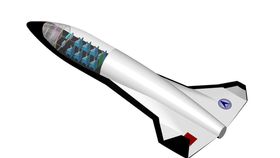


A government-backed company in China is apparently working on a space plane, reports New Scientist, which may carry as many as 20 people to space.
The vehicle is being designed by the China Academy of Launch Vehicle Technology (CALT) in Beijing, which is widely known for building the successful Long March rockets that China has used for its space endeavors.
And this latest project, to build a reusable space plane, was revealed at the International Astronautical Congress (IAC) in Guadalajara, Mexico, last week by rocket scientist Lui Haiquang from CALT.
Optimistically, CALT says a test version of the plane could fly in two years, with space tourism and satellite launches both eyed as goals. Paying customers could fly on board for as little as $200,000, while small satellites could be launched into orbit.
The vehicle – which uses liquid methane and oxygen for fuel – would be unlike others such as Virgin Galactic’s SpaceShipTwo (which carries eight people), in that it would launch and land by itself without the need for an aircraft to carry it to a high altitude.
“The vehicle will take off vertically like a rocket and land on the runway automatically without any ground or on-board intervention,” said Han Pengxin, the team leader, reported New Scientist.
There would be two versions of the plane. A smaller, 10-tonne (11-ton) vehicle will have a wingspan of 6 meters (20 feet). It will take five people to an altitude of 100 kilometers (62 miles), giving them two minutes of weightlessness.
A second version, weighing 100 tonnes (110 tons) and with a wingspan of 12 meters (40 feet), would be able to take 20 people to a height of 130 kilometers (80 miles), with four minutes of weightlessness.
At the moment, the plane only appears to be in the design stage, and has yet to be built, let alone tested. So whether they can deliver on these promises remains to be seen.
If it does come to fruition, it will eclipse Virgin Galactic's vehicle and XCOR's Lynx as the largest space plane in operation.
(H/T: New Scientist)