


 Technology
 PUBLISHED

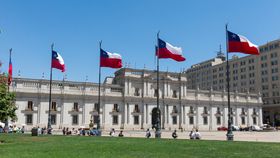


Some countries appear to be turning their back on science, while others are choosing to fully embrace it. Chile defiantly falls into the latter camp. Last Thursday, the government released a statement revealing plans to launch a Ministry of Science, Technology and Innovation to oversee science research, policy, and funding.
Gonzalo Blumel, secretary-general of the presidency, called it "a historic day for the science and the future of our country."
"This is the most important reform in the last 50 years in terms of institutionality for science," he added.
The decision, according to local papers, will make Chile the sixth Latin American country to introduce a ministry for science – the other five being Argentina, Brazil, Costa Rica, Cuba, and the Dominican Republic.
Its job, explains Minister Blumel, will be to "promote the production of knowledge" – the only resource "not exhausted" – and "move the frontiers of science, innovation, and technology".
These plans are five years in the making. It took some time to get going because the government made a concerted effort to rope in researchers, universities, and businesses to advise in its development, reports Science Mag.
In addition to issues concerning science policy and research, it will take over the responsibility of handling the nation's science funding from National Commission for Scientific and Technological Research (CONICYT), which was set up in 1968 as a department in the Ministry of Education. Its budget is likely to be decided when the government releases its budget statement in October but if it is anything like what the CONICYT received last year, we can expect to equate it to roughly 328 billion Chilean pesos or $520 million.
As well as a chairperson or Minister of Science (who is yet to be decided), there will be eight qualified members with different areas of expertise to advise the government on science funding issues. They will be replaced once every four years. The bill also includes plans to create a National Agency for Research and Development to replace CONICYT.
But it's not just setting up a department dedicated to science that puts Chile in science's good books. The country has initiated a number of policies over the past few years to protect its local wildlife, increase protected national parkland, tackle pollution, and curb climate change, including a ban on plastic bags, which was announced just last week. This would make it the first country in South America to do so.
Go Chile!




 1
1