Space and Physics
 PUBLISHED
 1
1
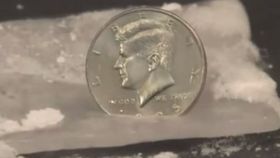


Carbon dioxide is typically known as a gas, though it exists as a solid when it reaches temperatures below −78.5 °C (−109.3 °F). This process is called deposition, and goes directly from gas to solid. When temperatures warm up, it sublimates and goes directly back into a gas.
Something very interesting happens when you insert a coin into a block of the dry ice; it produces a shrill screech when contact is first made and will begin to vibrate, almost like the coin is shivering.
So why does this happen?
When the half dollar is pushed into the block, the warmth of the metal sublimates the dry ice and causes a change in pressure. As the gas pushes past the coin, the pressure causes that shriek. After some time, the coin forms a larger hole in the dry ice, producing larger air currents that push the coin around, causing it to vibrate and appear to be shivering.