Space and Physics
 PUBLISHED
 5
5



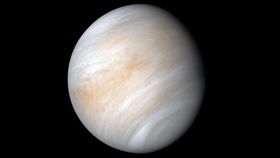


NASA Administrator Sen. Bill Nelson has today announced NASA’s next two Discovery missions: DAVINCI+ and VERITAS. Both missions will be tasked with studying Venus. This marks the first time in 30 years that the space agency will return to Earth's fiery hellish twin.
The DAVINCI+ (Deep Atmosphere Venus Investigation of Noble gases, Chemistry, and Imaging Plus) discovery mission will inform our understanding of the dense and toxic Venusian atmosphere, something that is exciting given the ongoing discussion of potentially interesting chemistry taking place there. This mission could also provide insights into whether the planet ever had an ocean.
The second mission is VERITAS (Venus Emissivity, Radio Science, InSAR, Topography, and Spectroscopy). This spacecraft will create incredibly detailed maps of the Venusian surface as well as analyzing the planet's geology.
Both missions will work together to understand why a planet so similar in size to Earth is an inferno of lead-melting temperatures and acid rain.
The missions have a projected launch between 2028-2030.
More to follow.