


 Health and Medicine
 PUBLISHED


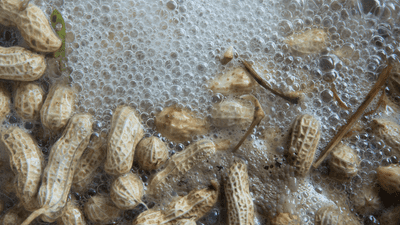


Eating boiled peanuts followed by roasted peanuts could be enough to help children overcome their allergies, according to new research. The idea goes that creating a weakened version of a peanut in which the immunoreactive parts are partially destroyed by heat could act almost like a vaccine, training up their immune system until handling a peanut is no problem.
The trial consisted of 70 participants, all children aged between six and 18 years who were known to have a peanut allergy. They were then given a 12-week course of peanuts that had been boiled for 12 hours, followed by a 20-week course of peanuts that had been boiled for two hours.
The “oral immunotherapy,” as the researchers described it, works by creating a version of a peanut in which heat has partially destroyed its structure and immunoreactivity. By boiling a peanut for 12 hours, you can create a hypoallergenic version, which over the course of three months may help the immune system to better tolerate the ingestion of nuts.
After 20 weeks of two-hour boiled peanuts, the participants went on to a 20-week course of roasted peanuts until eventually they were eating 12 of them daily. They were then assessed for how desensitized they had become to peanuts, to see if the oral immunotherapy had been successful.
The result showed that 80 percent of the participants had become desensitized to peanuts following the treatment, representing 56 of the 70 children enrolled into the trial. Over all, the researchers concluded that the treatment “was well tolerated and had a very low frequency of rescue epinephrine use.”
While a successful outcome for the majority of the participants, adverse effects from the oral immunotherapy were reported in 61 percent of participants, and three children had to withdraw from the trial, demonstrating that the approach shouldn’t be tried at home outside of a clinical trial setting.
The researchers also highlight in their discussion that they didn't research the long-term effectiveness of the treatment, which will need to be investigated further before the boiled peanut approach can be rolled out. A 2019 study found that a type of desensitizing treatment that introduced small amounts of the allergen into people's diets may actually have worsened the likelihood of anaphylaxis in the long run, so the lasting effects of such treatments are worth establishing.
Despite this, it appears that treating peanuts in this way could be a cost-effective way to desensitize some children to this allergen, and potentially save lives in ridding them of the worst of their immune response to peanuts. Given that 1–3 percent of children in Western countries are affected by peanut allergies, this could make everyday life a little safer for a lot of children.
“Oral immunotherapy using boiled followed by roasted peanuts represents a pragmatic approach that appears effective in inducing desensitization and is associated with a favourable safety profile,” the authors concluded.
The study was published in the journal Clinical & Experimental Allergy.

 1
1