Health and Medicine
 PUBLISHED


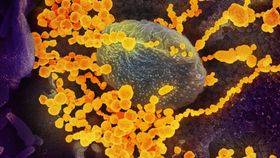


Researchers have extracted and isolated antibodies from Covid-19 patients and found they are among the most potent way to neutralize SARS-CoV-2 in an animal model. If this holds true in people, it could be used as a way to treat those with the disease and inoculate those who are at risk.
Antibodies are proteins that bind to pathogens, signaling to cells in the immune system to destroy them. When the human body experiences a new infection, the body rushes to create antibodies that can fight off the pathogens.
"We now have a collection of antibodies that's more potent and diverse compared to other antibodies that have been found so far, and they are ready to be developed into treatments," team leader David Ho, scientific director of the Aaron Diamond AIDS Research Center and professor of medicine at Columbia University Vagelos College of Physicians and Surgeons, said in a statement.
By looking at the antibodies of many patients that had developed Covid-19, researchers were able to isolate those best suited to fight off SARS-CoV-2, the virus responsible for the disease. The people who fought the disease the longest had stronger antibodies. As reported in Nature, this cocktail of antibodies appeared to protect hamsters from SARS-CoV-2 infection.
"We think that the sicker patients saw more virus and for a longer period of time, which allowed their immune system to mount a more robust response," Ho added. "This is similar to what we have learned from the HIV experience."
Antibodies bind to the spike protein the virus uses to attach itself to human cells. However, various types of antibodies bound to different parts of the spike protein, so having a mixture of them makes the whole greater than the sum of its parts.
The presence of these powerful antibodies is good news for vaccines as it suggests the human body can generate a strong immune response. Although this new method needs to go through more animal and human testing, the team believes their finding could be an important treatment for the disease. Antibody approaches also tend to be approved faster, which means this could be an important avenue of research until a vaccine is developed.