


 Technology
 PUBLISHED


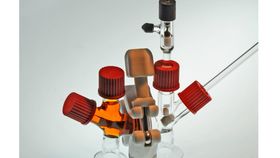


There is a new entry in the race to store electricity from intermittent sources such as solar and wind power. Being new, air-breathing, aqueous sulfur flow batteries are starting a long way behind well-developed options such as pumped hydro and lithium-ion batteries, but have the theoretical potential to far out-perform anything currently available.
The price of solar and wind has dropped so dramatically that they are often cheaper than fossil fuels, or will be soon. The main obstacle to the adoption of clean power is finding affordable ways to store what we produce in sunny or windy conditions.
Although we have an abundance of options for storing electricity, most are very expensive, and the two cheap options – pumped hydro and compressed air – are only suited to certain locations. A team led by Professor Yet-Ming Chiang of Massachusetts Institute of Technology (MIT) decided to go back to basics.
Although most of the cost of batteries lies in their manufacturing, and this is falling as mass production provides economies of scale, there are still fundamental limits below which existing battery technologies cannot go, namely the cost of the raw materials. To their astonishment, Chiang's team realized that for 40 years, new battery technologies have relied on more expensive raw materials than the ones we had previously. This reflects a trend for researchers to prioritize energy density (making batteries suitable for applications like laptops and phones) over cost.
Responding to former US Energy Secretary Steven Chu's challenge to cut battery costs by a factor of five in 5 years, Chiang sought the cheapest materials capable of making batteries. The team's success was announced in Joule.
Batteries need positive and negative electrodes and an electrolyte that flows between them. While some existing options make one or two of these cheaply, the few where all three are very low cost have their own problems. Sulfur is more than 10 times cheaper per unit of energy than any alternative material from which cathodes can be made, so Chiang decided to start there and look for a compatible cheap anode. An attempt to use potassium permanganate failed, but led to the accidental discovery that with sulfur cathodes and the right electrolyte, it's possible to literally make a cathode out of air.
Sodium in a watery solution proved an effective charge carrier, and while not as energy dense as some alternatives, it is certainly cheap.
The combined cost of the sulfur, salt, water, and air comes to roughly $1 per kilowatt-hour (kWh) of storage, compared to $100 per kWh for lithium-ion batteries. Some low-cost batteries have such low energy density they are impractical, but Chiang's product stores 30 to 145 watt-hours per liter – not enough for use in transportation, but easily suitable for bulk storage.




 1
1