Technology
 PUBLISHED
 1
1




Neural networks, what we commonly call artificial intelligence or AI, are good at detecting patterns, which is why there are many intriguing pattern-recognition approaches being investigated in large data sets in many fields, such as cancer diagnosis and treatments. But can they be fooled? In an experiment to see if AI can detect and even confirm alien life, the answer is a resounding yes.
It's no secret that NASA uses AI to analyze data and reveal patterns and trends, and has been doing so for decades. However, the new research shows that AI may not be reliable in what it is detecting – especially with something as sensitive as the confirmation of alien life – as it was even more easily duped by false positives than its human counterparts.
Ankit Gupta and Christoph Adami from Michigan State University were able to easily trick an AI trained to recognize signatures of life. The “life” in question was actually digital organisms, computer codes that can copy themselves and pretend to evolve.
Digital life has been used for decades to study evolution, and using a particular computer program called Avida, they produced tens of thousands of digital organisms. Most of them had the hallmark of “life”; basically, they replicate, but their offspring are an imperfect copy. The rest, instead, do not behave like that.
Gupta and Adami trained an AI to distinguish between the two types, and it could do so with an accuracy of 99.97 percent. That would make one confident that AI can then recognize life that it has not seen before.
However, the team found the opposite to be the case.
"No matter what sequence of commands we started with, we were able to fool the AI 100% of the time," Gupta, who is a PhD student in computer science and engineering, said in a statement.
The team started with a digital non-life organism, which the AI correctly spotted as non-life. They then tweaked the organism's computer code, step by step. In as little as 150 changes later, even though the organism was still not self-replicating, the AI began to believe that it was looking at the living ones.
False positives
There have been plenty of concerns about false positives in AI outputs; the research shows that even when the algorithm aces the training, it might still be tricked. This is bad news if you are a space agency or private space company planning to put an AI on a very expensive life-hunting rover; what you get out might not be the correct answer.
“AI has an Achilles heel,” added Adami, a professor in MSU’s departments of microbiology and molecular genetics, and physics and astronomy. “It can see a pattern and completely misclassify it.”
Similar concerns have also been raised in a new paper published in The Planetary Science Journal. Researchers at the Southwest Research Institute looked at eight AI-generated lunar crater catalogs. That approach looked to automatically collect location, size, and other physical characteristics of those impacts.
It turns out that when you apply to them the same standards that human work is held to, these catalogs are quite poor indeed.
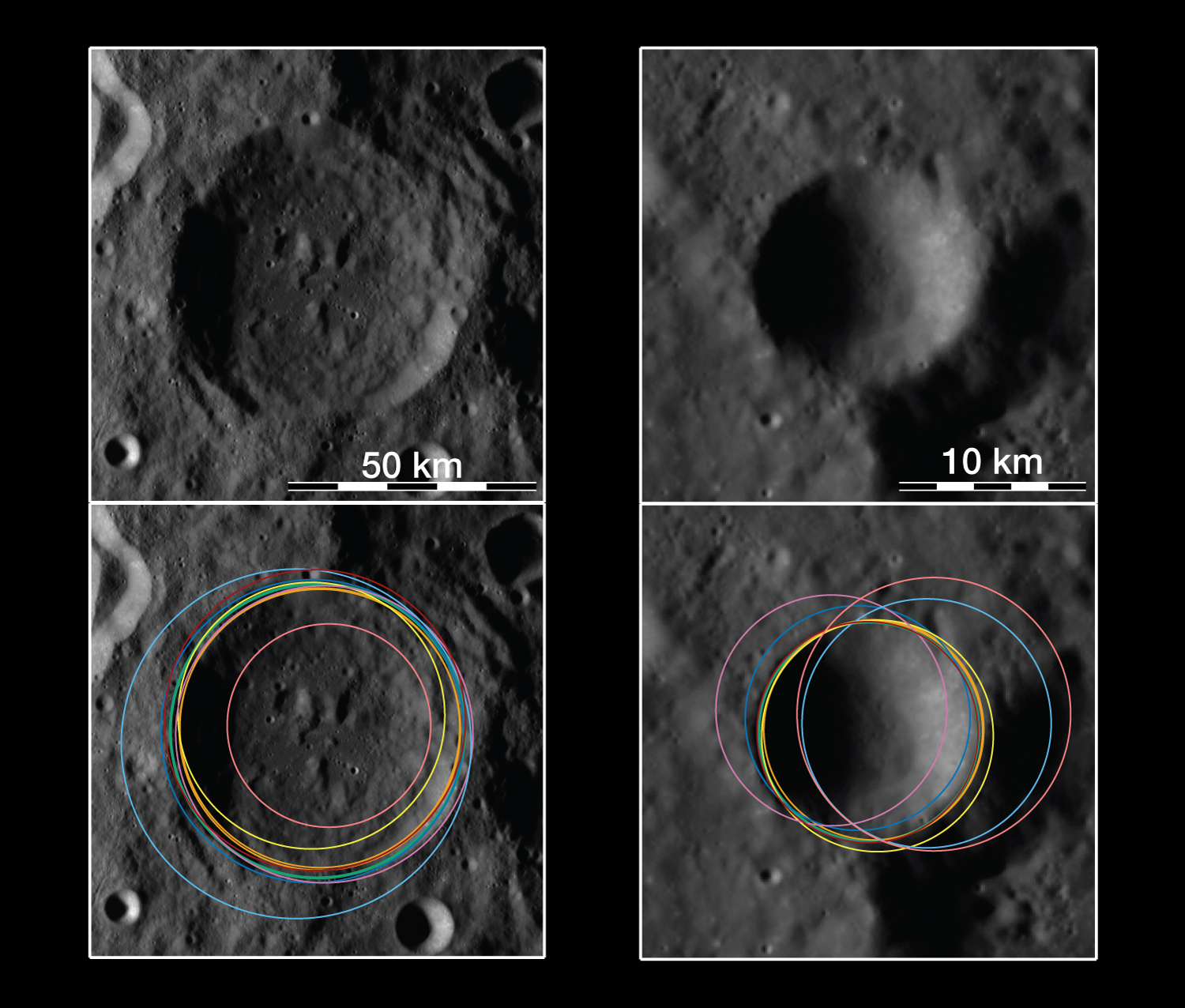
There is potential that AI can be used to automate the classification of large amounts of data, being effective at recognizing certain patterns; at the same time, this comes with weaknesses such as creating large numbers of false positives or producing low-quality outputs. You can’t rely on machines alone.
“There needs to be a human in the loop,” Adami said.
Gupta and Adami presented the work in the Proceedings of the 2026 Conference on Artificial Life. The team now plans to perform the same test on real, and not digital, life data.