Humans
 PUBLISHED


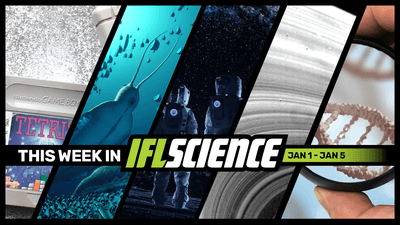


This week evidence of 518-million-year-old giant predatory worms was discovered in Greenland, the Zoo Hypothesis is the unnerving answer to the Fermi Paradox, and evolution may not be as random as previously thought. Finally, we ask: what is Munchausen by proxy, and how does it affect others?
Subscribe to the IFLScience newsletter for all the biggest science news delivered straight to your inbox every Wednesday and Saturday.
13-Year-Old Boy Becomes The Only Human To Ever Complete Tetris
Tetris has been around for a while, so you might have assumed it would be complete by now, but the video game has only just been completed by a human for the first time since its release. Thirteen-year-old Willis “blue scuti” Gibson beat the game during a livestream, triggering the "true kill screen" on level 157. Read the full story here
Giant Predatory Worms Dating Back 518 Million Years Found In Greenland
Ancient predatory worms dating back around 518 million years have been discovered in North Greenland, where a treasure trove of Early Cambrian fossils lay in wait in the Sirius Passet Lagerstätte. The new-to-science animals have been named Timorebestia, Latin for “terror beasts”, and their discovery reveals new insights into a curious group of predatory worms that are still alive today. Read the full story here
"Zoo Hypothesis Or Nothing": New Unnerving Answer To The Fermi Paradox
A new paper has taken a fresh look at the Fermi Paradox, arguing that if we continue to find no evidence of advanced alien life as our technology progresses we will soon be left with two options: The Zoo Hypothesis, or nothing. Proposed by John Allen Ball in 1973, the Zoo Hypothesis is the idea that aliens may be aware of us but are hiding themselves from us. Read the full story here
Hubble Photos Show Mysterious Dark "Spokes" Moving In Saturn's Rings
In 1984, Voyager 2 flew past Saturn, taking astonishing photographs of the gas giant in resolutions we had never seen before. As well as spotting undulations in the planet's rings – the result of a then undiscovered ring-shepherd moon – the probe captured images of strange dark "spokes" in Saturn's rings. Read the full story here
Evolution May Not Be As Random As Previously Thought
The theory of evolution by natural selection is robust and well-evidenced, but that doesn’t mean we are not learning new things about how life develops and changes over time. A new study has found that evolution may not be as unpredictable as previously thought. The implications could open the door to novel ways to tackle real-world issues, including antibiotic resistance, disease, and even climate change. Read the full story here
TWIS is published weekly on our Linkedin page, join us there for even more content.
Feature of the week:
In Munchausen By Proxy Cases, Caregivers Invent Illnesses For Their Children
Munchausen by proxy cases have risen to a strange kind of infamy following the recent release of Gypsy Rose Blanchard after eight years in prison. The harrowing story highlights the devasting impact that this psychological condition can have on families and the extremes that the abused have reached to escape their situation. Read the full story here
More content:
Have you seen our free e-magazine, CURIOUS? Issue 18 January 2023 is out now. Check it out for exclusive interviews, book excerpts, long reads, and more.
PLUS, the entire season 3 of IFLScience's The Big Questions Podcast is available now.