Culture and Society
 PUBLISHED
 6
6





Some units of time transcend culture. Most people throughout time have had a concept of a “year” that is roughly 365 days, for example, because the period really presents itself for the taking: it's the amount of time it takes for a complete run of seasons, or for the sun to return to the same place in the sky relative to the stars around it.
The same is true for the “month”: you can't help but notice it takes about 30 days for a big, fat moon to wane away, disappear, and come back again. And the fact that a “day” is 24 hours – well, you don't need us to explain that to you, surely?
Other time periods, though, aren't so self-evident. We divide each day into 24 hours, but there's no objective reason to choose that many – it's mostly a relic of ancient Babylonian and Egyptian astronomy. Same with the fact that there are 60 minutes in an hour and 60 seconds in a minute, even if nobody really bothered with seconds until the 16th century (yes, AD).
And then there's the week. The seven-day cycle so fundamental that the writers of the Bible even assumed their god would adhere to it. But who decided on that number? Seven is hardly an obvious choice: unlike the circle's 360 degrees, it isn't highly composite. It isn't composite at all, in fact; it's prime. It isn't a nice divisor of 30, or 365, so it wasn't that it slices up the months or years neatly. Seven is kind of a pain all round.
So why is it so universal?
The first weeks on Earth
The oldest calendars on Earth don't really have weeks. At least as far as we can tell. Getting into the minds of the early Neolithic builders of places like Göbekli Tepe is difficult, but it certainly seems like 29- or 30-day months are the furthest they went.
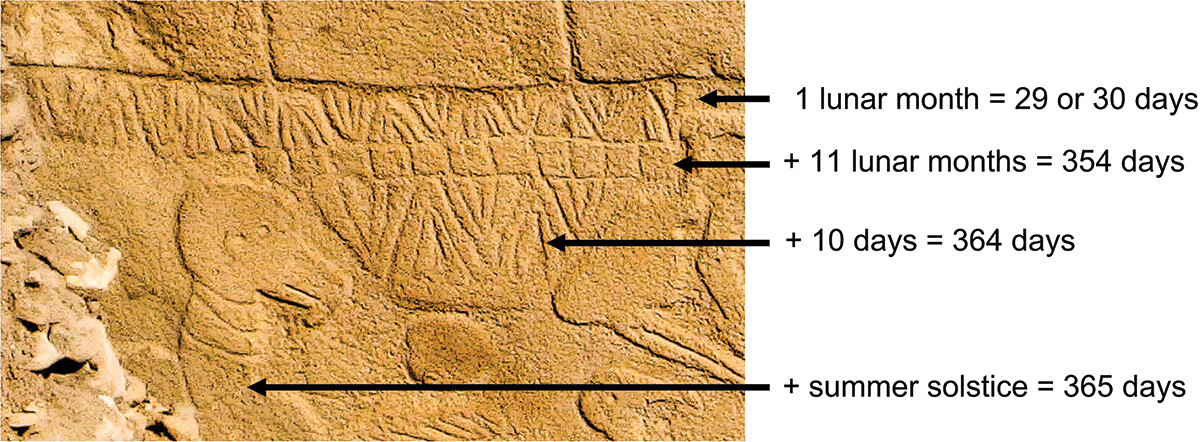
Fast forward a few millennia, though, and we start to see mid-length subdivisions that are smaller than a month but not as small as a day. At Stonehenge, 30-day months are split into three 10-day weeks; Egypt was similarly decimally minded; and, over in Assyria, they observed the hamuštum – a length of time whose length nobody seems to agree on. The best we can say is that it was probably between 6 and 10 days, but it may have depended on the month.
South of Assyria, local rivals Babylon observed a seven-day cycle … most of the time. It is, as we pointed out, difficult to split 30 by 7. But even though their weeks occasionally lasted nine or 10 days, the Babylonians still called every seventh day the sapattu, and if you're thinking that sounds suspiciously like a “sabbath” day, then congratulations! You could be a linguistic archaeologist.
Yes, perhaps the earliest solid evidence we have of a standardized week is also the most famous example: the creation story in Genesis. That one is, of course, seven days long, with the final one being a shabbat or sabbath. It's from here, via Christianity and the Roman Empire in the West and Islam in the East, that our modern concept of a seven-day week has grown up and come to take over the world.
In other words: next Sunday night, when you're lying in bed fretting over the start of a new work week tomorrow morning, you can blame the ancient Babylonians and their sapattu system. But here's a question: what about all those places that didn't get the memo on the whole Abrahamic religion thing?
Before there were seven
What would a world look like without the Roman Empire? Well, let's take a mosey over to the places they never got to – and a good place to start, already famous for its calendar system, is China.
The earliest calendars in China come from three or four millennia ago, which makes deciphering them quite difficult. It's not until the Spring and Autumn period, from the eighth to the fifth century BCE, that we get the first clear calendars – and boy do we get them: “During [this period], Chinese people used 6 different types of calendars: Yellow Emperor's Calendar, Zhuangxu, Xia, Shang, Zhou and Lu Calendar,” wrote the Confucius Institute's Natasa Kostić and the University of Belgrade's Stevo Šegan back in 2009.
Sound exhausting? Try this: “Throughout the entire history, Chinese astronomers altogether compiled more than 100 different calendars, including official and nonofficial [ones],” the pair noted.
It seems most of these calendars, or at least the most prominent ones, had 10-day weeks – sometimes with extra days sitting in between each of them, if it helped the division.
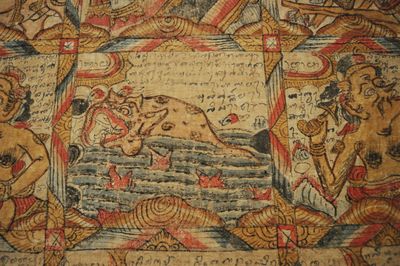
But 10 is hardly the only choice for a week's length. Over in Central and South America, the Aztecs, Maya, and other Mesoamerican peoples went even further, counting a 13-day week that Spanish chroniclers called trecenas. In Java, they worked out a five-day week, and back in Ancient Rome – before the adoption of Christianity, obviously – they had an eight-day week, confusingly named the “nundinum,” or “nine-day”. Worst of all, the Balinese calendar has 10 weeks of different lengths that run simultaneously at all times, which just sounds stressful as all hell.
Forever seven?
The seven-day week may have taken over the world, but will it live forever? It's hard to imagine a planet-wide changeover – but that doesn't mean nobody has tried.
The 1790s were a tumultuous time in France. They threw out the royals, instituted a republic, replaced the currency, invented the entire metric system… and if you're doing all that already, why not come up with an entirely new system of time while you're at it?
Enter the French Republican Calendar: a 12-month cycle beginning on the autumnal equinox, with each month comprising three 10-day weeks. And yes, if you're thinking “but IFLScience, that only adds up to 360 days, not 365!”, fear not: at the end of the year there were five (or six, in leap years) extra days just kind of tacked on to make up the difference.
If you're not confused yet, know this: they tried to decimalize time, too. As in: the government issued a decree stating that “The day, from midnight to midnight, is divided into ten parts or hours, each part into ten others, so on until the smallest measurable portion of the duration. The hundredth part of the hour is called decimal minute; the hundredth part of the minute is called decimal second.”
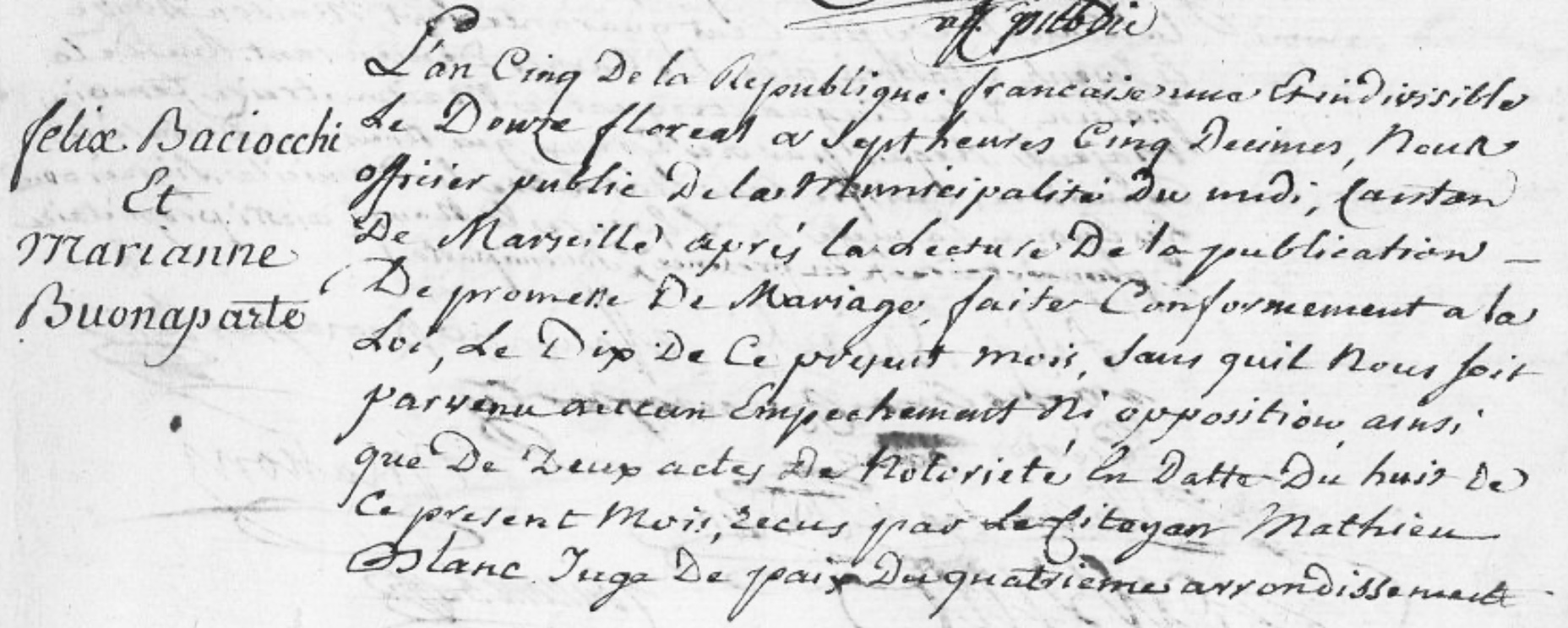
People did really use this setup – we have the marriage certificate for Napoleon's sister, for example, which shows a date of “12 floreal l'An V à Sept heures Cinq Decimes,” AKA the 12th of Floreal, year 5, at 7.5 o'clock. In less revolutionary terms: May 1, 1797, at 6 pm.
But despite quite an enthusiastic push to use it, running an entire country on a system completely out of sync with basically everyone else proved inexplicably unpopular. Overall, the entire thing lasted less than seven months, at which point it was abandoned.
For now, then, it seems the seven-day week is here to stay. At least, that is, until we start using stardates – at which point the French Revolutionaries will finally be vindicated.