Health and Medicine
 PUBLISHED
 2
2






What you’ll discover in this article
- NEXT Life Sciences are announcing results from human trials of two contraceptive products designed for the male reproductive system.
- IFLScience met Founder and Executive Chairman L. R. Fox, who told us more.
- PlanA is a long-acting, reversible barrier that blocks sperm from traveling up the vas deferens.
- The other product, PausePill, is a newly announced on-demand, non-hormonal contraceptive pill that temporarily prevents sperm movement from around two hours after taking it.
A “revolution” is coming. In as little as two years, I’m told, we could see a radical shift in the birth control landscape that will leave people of the future in mystified horror that we ever lived this way.
I’m meeting with L. R. Fox, Founder and Executive Chairman of NEXT Life Sciences, to talk male birth control. Fox is excitedly filling me in on the results of clinical trials for two different but complementary products.
If both progress through approval and reach the market as hoped, that would be quite the improvement from the current situation in contraceptive methods designed for the male reproductive system – condoms, a vasectomy, and... that's your lot.
"Just the status quo"
There are two major problems with current long-acting contraceptive methods like the birth control pill, as Fox sees it.
“Those require compliance, number one, ongoing compliance. And then number two is that they [don’t] provide the level of certainty that we know men and women are going to expect from a new type of birth control.”
He was telling me about attempts to develop methods of damaging or disabling sperm so that they cannot fertilize an egg effectively – “like really sophisticated spermicide, basically.”
In practice, this could look like a pill, patch, or injection that a man could take to prevent sperm functioning normally, or a product that could be applied vaginally to disable sperm before they can travel too far up the vaginal canal.
There’s lots of research ongoing into such methods, but Fox believes there are better ways to go.
One issue is that for something like that to work, the treatment would have to be taken consistently throughout the entire spermatogenesis cycle, which in an adult man is roughly 75 days. That’s how long it takes for new sperm to be produced and mature.
If you miss doses during that time, you risk some of the sperm not being affected and fertility being retained.
I say alleviate the burden. Make birth control not suck. Shouldn't be that difficult.
L. R. Fox
The other problem Fox sees is in efficacy.
Female birth control pills are over 99 percent effective at preventing pregnancy if used perfectly – but perfection is a pretty big ask. With what’s known as “typical use”, according to the UK’s National Health Service, the combined and progesterone-only pills are around 91 percent effective at preventing pregnancy.
Condoms are 82 percent effective with typical use, and for internal/female condoms it’s 79 percent.
“With female birth control, with typical use, they're not the world's most effective thing at all. But we accept it because that's just the status quo,” Fox told me. He believes that there’s a better way.
10-minute procedure, 10 years of protection
The first of NEXT’s products that we talked about is called PlanA, and it’s what’s known as a long-acting reversible contraceptive (LARC).
An equivalent in female birth control would be things like IUDs and the contraceptive implant: once they’re in place, they work for a long period of time, but if they’re removed then fertility should return to normal levels.
The results of the first in-human study of PlanA are now being reported by the company. According to a statement seen by IFLScience, all participants in the study experienced:
- Successful treatment
- Declining sperm counts within the first 14 days
- Azoospermia (no measurable sperm in semen) reached between 14 days and three months
- No unresolved adverse effects
So how does it actually work?
“It’s a 10-minute doctor's visit,” Fox tells me. “You get 10 years of protection, no hormones, no really notable side effects.”
The PlanA system involves a hydrogel called Vasalgel that is injected into the vas deferens, the tube that carries sperm from the epididymis at the top of the testicle to the urethra. There are two vasa deferentia in the male reproductive system.
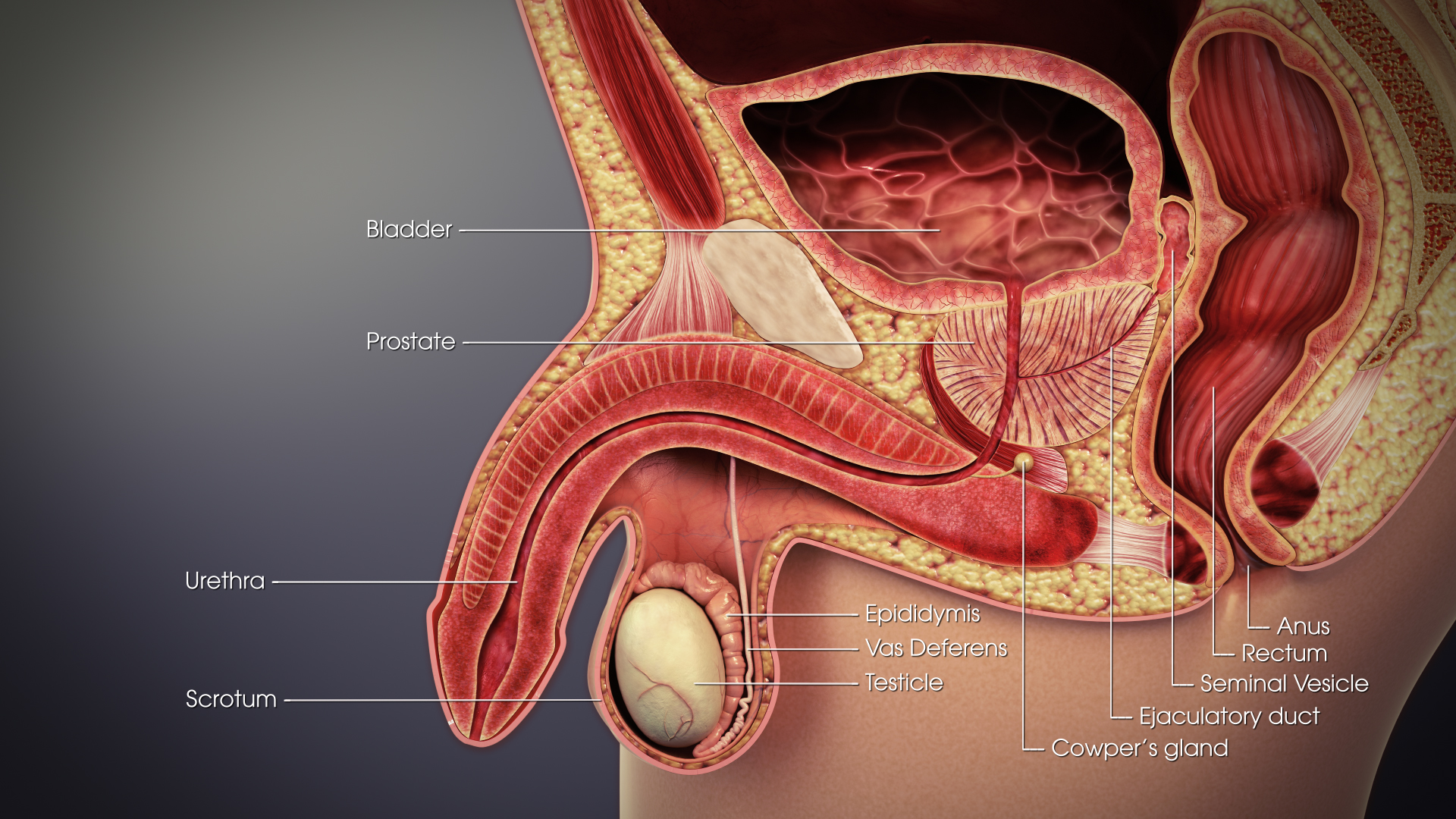
“One drop of hydrogel into the vas deferens […] creates a 1-micron filter, and sperm are about 3-5 microns in size.”
Sperm can’t get through, but the filter itself is biocompatible, so the body’s immune system doesn’t react to it. Theoretically, it can stay put for at least 10 years and dissolving it should only require an equally quick doctor’s visit.
It’s the same principle as a vasectomy – but in that case you’re having surgery to cut the vas deferens with no guarantee it can ever be reattached should you change your mind later.
The next phase of clinical testing has already begun, which will include the reversal process.
Introducing: PausePill
Alongside PlanA, there’s another product that NEXT Life Sciences are now unveiling for the first time, and as Fox tells me how it works I’m struck by the fact that I’ve never heard of anything quite like it before.
“When someone ejaculates, the vas deferens constricts and squeezes out the sperm,” Fox explains.
“There’s soft muscle tissue that surrounds the vas deferens. So what we do is we just relax those muscles. [W]hen a man orgasms, there’s no sperm added to the ejaculate.”

The product is called PausePill and it promises to be “the first and only on-demand male birth control.”
“That means,” Fox emphasizes, “you take it and you’re covered for the day. [It] works because you took it that day. It doesn’t depend on compliance two weeks ago.”
There’s no currently available equivalent product for either male or female contraception. Female hormone-based contraceptives do not necessarily offer protection straight away, as it depends on where in the menstrual cycle a woman is when she starts to take it.
By contrast, one could imagine men using PausePill in a similar way to how they might use erectile dysfunction medication – on-demand, temporary, and quick-acting protection when it’s needed.
NEXT Life Sciences is also announcing the results of a randomized, double-blind, placebo-controlled trial of PausePill, in which the drug:
- Prevented sperm release in all participants within two hours
- Had no negative impact on sexual pleasure or function
- Caused no unresolved adverse effects
The participants in the trial were also reportedly very interested in getting their hands on more PausePill in the future – which is quite striking, as current contraceptive methods are not necessarily something we associate with unbridled enthusiasm.
Both of these will be in the consumer’s hands [...] within two years.
L. R. Fox
For a lot of women, it’s more likely to be a mixture of gratitude that contraception exists at all, and disappointment that there aren’t more or better options.
Or that still, even in 2026, the bulk of the responsibility falls onto our shoulders.
"Make birth control not suck"
Why has it taken so long to get to the point where we’re even discussing a timeline for new and innovative products like PlanA and PausePill, I ask Fox.
“I think we as a society has only recently come to terms with the fact that female birth control is not an ideal solution for a large number of women,” he says.
A 2021 survey commissioned by Public Health England found that a third of the respondents (over 97 percent female) had stopped or switched contraceptive methods.
One reason given was unwanted side effects, although some of those reported they’d stopped because they wanted to get pregnant. LARC methods had consistently high satisfaction rates in the survey.
However, it may be notable that the most common single method reported was the male condom, and over 1,200 people (18 percent of the respondents) also reported using no method at all or an unreliable method of contraception such as withdrawal.
A 2025 study in England and Wales also found evidence for a move away from hormonal contraception – and towards less effective methods – among some women between 2018 and 2023.
“[F]or a long time, the female birth control is just accepted as just ‘it's solved, birth control [is] solved, and it's on women’. [More recently] there's been this gross, I'd say, reaction to this awareness that female birth control isn't the right solution for everyone, which is people are like, ‘Oh, you're right! Birth control sucks for women. You know what? Let's shift the burden to men.’”
This, Fox reasons, is why so much funding has gone towards hormonal approaches to male contraception.
“I say alleviate the burden. Make birth control not suck. Shouldn't be that difficult.”
For Fox, it’s about choice.
“It should be both sides [in a heterosexual couple] being able to make a decision that works for them when they're ready to have a child. If they're not ready to have a child, then they should both be on birth control.”
And that birth control, he posits, should simply be better than it currently is.
"I'm not stopping here"
PlanA is further down the developmental tracks than PausePill, though neither has yet reached the end of the clinical testing that will be needed to bring them to market. The latest results are also yet to be published in a peer-reviewed paper, though this is in the works.
Fox has high hopes for both.
PlanA, as a medical device rather than a pharmaceutical drug, is regulated differently by the US Food and Drug Administration (FDA) and so the approval process is also different.
“It’s biocompatible, it’s inert. So, your body doesn’t even recognize it,” Fox told me. “There’s a near-zero chance that it does something else […] so that’s why we have such confidence in this, and the FDA has high confidence.”
With PausePill, he adds, the mode of action is so targeted at the vas deferens that studies so far suggest a low risk of off-target effects, so NEXT Life Sciences have high confidence of positive results in later stage trials.
“Both of these will be in the consumer’s hands and men’s and couple’s hands within two years.”
And, Fox tells me, “I’m not stopping here.”
“We have about half a dozen other products around refractive and sexual health that are being developed, including female birth control […] but we announce them when we are highly, highly certain.”
PlanA came first, and PausePill, he explains, has now reached that certainty threshold. We’ll have to wait and see what comes next.