Health and Medicine
 PUBLISHED



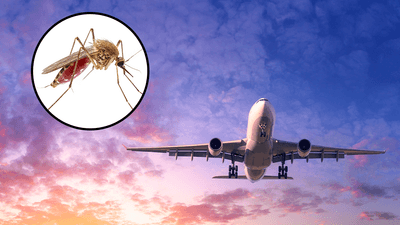


Malaria isn't a disease you expect to encounter in northern Europe (though with climate change the way it is, who knows how long that will last), which makes a recent outbreak in Germany rather unusual.
In July this year, four workers at Frankfurt Airport, Germany’s busiest international hub, were reported to have been infected with malaria. That number has since been updated to six, and we now know that two of the infected workers died.
The situation is being treated as an example of "airport malaria," since the workers involved hadn't traveled anywhere themselves. Instead, it appears that the infected mosquito or mosquitoes came to them by stowing away on an airplane.
According to a bulletin from the Robert Koch Institute (RKI), the German federal public health agency, the first four workers became ill between July 4 and 6, and the most likely cause was identified as a mosquito “imported via aircraft."
This kind of outbreak is rare, and in Germany – as in other non-endemic countries – malaria almost exclusively affects those with a recent history of foreign travel.
A global killer
There are several types of human malaria, but the one in this case was caused by the Plasmodium falciparum parasite. It’s the deadliest form of the disease, which, if left untreated, can kill within 24 hours, according to the WHO.
Globally, malaria is responsible for hundreds of thousands of deaths each year, predominantly in Africa. It is, however, considered a preventable and curable disease if the correct treatments and measures can reach infected people fast enough.

For those living in or traveling to a region where malaria is prevalent, these preventative measures will be familiar: mosquito nets, insect repellents, screens on windows, etc. Because the disease isn't transmissible directly from human to human, the main way to prevent its spread is to control the mosquitoes themselves.
There are also drugs to prevent the disease from taking hold, and, more recently, vaccines have become available. For those who become infected, so long as they get speedy access to medical care, there is a good chance the infection can be successfully treated with a combination of antiparasitic drugs.
However, that relies on identifying the disease quickly.
The risks of delayed diagnosis
The early symptoms of malaria look the same as many other infectious diseases: a fever, headache, and chills are common. This, according to the RKI bulletin, was likely one of the issues in the case of the workers from Frankfurt Airport.
“The absence of a travel history can lead to a delay in diagnosis,” reads a translation of the bulletin. “A delayed diagnosis increases the risk of a severe course of the disease.”
While rare, there have been previous cases of airport malaria in Frankfurt and around the world. A 2024 review of airport and luggage malaria found 145 reports of cases in Europe between 1969 and 2022, of which most cases (32) occurred at Charles De Gaulle airport in Paris.
“Three Frankfurt International Airport employees without travel histories to malaria-endemic areas were diagnosed with Plasmodium falciparum malaria in Germany in 2022,” reports a separate 2024 paper in the infectious disease journal Eurosurveillance.
In that situation, two of the three had severe disease but all recovered fully. The last airport malaria case in Germany was in 2023, also at Frankfurt Airport.
Attempts to find evidence of the actual insects that caused the 2022 cases were unsuccessful, but genetic sequencing revealed that the most likely point of origin for the parasites was Ghana. A package from Ghana had arrived at the airport during the timeframe when the outbreak was most probably sparked.
The workers were stationed in different parts of the airport, but, as pointed out by the authors of the 2024 study, Anopheles mosquitoes, the usual vectors of P. falciparum, can fly up to 7 kilometers (4.3 miles) in good weather. An insect could therefore have crossed enough ground at the airport to infect all three of them.
Again, the lack of a travel history was a factor – it’s just not going to be the first disease a doctor thinks of when someone hasn't recently been to an endemic country – but as mentioned, all the people involved in the 2022 outbreak later recovered.
“Over the past few years, Europe has experienced a rise in imported cases of malaria, a development which could be accelerated by climate change,” the authors of the 2024 paper wrote.
“Airport staff and medical personnel should receive more training on of the possibility of non-endemic diseases by specialists in infectious diseases and in public health, to improve awareness.”
According to the BBC, Frankfurt public health officials have issued a media statement, confirming that the current risk to the general public is “considered very, very low.” Blood analyses are being carried out to attempt to determine whether the workers were bitten by one or multiple different mosquitoes.
Pathogens with a passport
This unusual situation underscores the need for greater awareness of the risks of imported diseases.
A similar story of a stowaway animal was told in a paper that came out last year: a rat that had its vacation plans cruelly trashed when it was discovered on a flight from Miami to Berlin.
Researchers speculated that the rat may even have boarded at the aircraft’s prior departure point of Dubai, making a jaunt all the way across the Atlantic and most of the way back before it was discovered.
While this particular individual wasn't carrying anything nasty, rats can harbor all sorts of human pathogens, as the recent hantavirus cruise ship outbreak demonstrated in dramatic fashion.
It’s definitely not only the human passengers who can be responsible for transporting diseases around the world.