Health and Medicine
 PUBLISHED




It is a staple of superhero movies, in which someone is blinded and then adapts to use their other senses in order to survive. But this has a fairly solid grounding in fact, as blind people are already known to be able to adapt their senses. Now, researchers have described for the first time the anatomical, structural, and functional changes that occur in the brain of people who have been blind from birth.
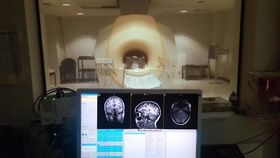
Published in the journal PLOS One, a team of scientists from Harvard Medical School have conducted MRI scans on 12 people who have been blind from birth or who went blind within the first three years of life, and compared them with 16 other normal-sighted people. These scans were able to reveal the widespread changes that have occurred in the brains of the blind participants as their brains grew and adapted to the lack of visual information, and shows just how plastic the organ can be.
The results suggest that in cases where children are either born blind or go blind early in life, the brain adapts to the lack of visual information. It seems to strengthen the links in other parts of the brain associated with senses such as hearing, smell, and touch, as well as produces new connections between regions in a way not normally seen in those that can see.
Not only that, but it also appears that there is a rewiring in the brain for areas associated with memory and language. The researchers suspect that this occurs through the brain's natural neuroplasticity, in which the organ can adapt and change in response to environmental conditions. This can occur throughout a person’s life, as synaptic connections are constantly changing, but it is particularly prominent in those whose brains are still developing, such as children.
“Our results demonstrate that the structural and functional neuroplastic brain changes occurring as a result of early ocular blindness may be more widespread than initially thought,” explains Corinna M. Bauer, who led the study. “We observed significant changes not only in the occipital cortex (where vision is processed), but also areas implicated in memory, language processing, and sensory motor functions.”
It is hoped that the research can help further our understanding of exactly how the brain does this, and how training could then enhance this rewiring to improve other senses like hearing, touch, and language skills.


 2
2