


 Health and Medicine
 PUBLISHED


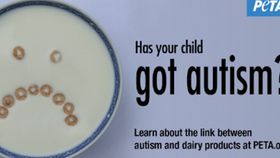


PETA have released online advertisements using two discredited studies to link autism to dairy consumption.
Unusually for PETA, the ad admits to a certain element of doubt. “More research is needed, but scientific studies have shown that many autistic kids improve dramatically when put on a diet free of dairy foods”. However, that is as far as the uncertainty goes. They patch up the limited studies with anecdotal accounts of anonymous parents whose children supposedly got better after being taken off milk products.
What PETA do not admit is that this further research has already been done and it shows that for all the reasons to give up dairy, a connection to autism is not one of them. The two studies PETA relies on had sample sizes of just 36 and 20 people respectively, barely enough for a pilot study. Dr Emma Burrows, an autism researcher at The Florey, Australia's largest neuroscience institute, expressed concern about the statement. "The balance of evidence suggests that this link does not deserve any media attention," said Burrows. "This is just adding to the multitude of conflicting and bewildering recommendations that parents of children with autism have to sift through."
The PETA ad also glosses over the initial papers concluding that gluten (usually from non-animal products) was as harmful as casein from milk products, the alleged source of the problem. Some children are indeed negatively affected by casein and should definitely be given diets free of animal milk, particularly that from cows, which is higher in casein than that of many other mammals. However, evidence for a connection to autism was always weak and has now been firmly discredited.


 1
1