


 PUBLISHED
 1
1


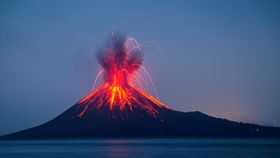


Researchers in New Zealand have created a new warning system that uses machine learning algorithms to predict imminent volcanic eruptions. Describing their protocol in the journal Nature Communications, the study authors explain that the system could have saved the 21 people who died when White Island erupted last December by notifying officials at least four hours before the eruption took place.
White Island – also known as Whakaari – is the most active volcano in New Zealand and has long been popular with tourists. Tragically, a group of 47 visitors and guides were present on the island when it erupted on December 9, 2019, with almost half suffering fatal injuries. A week before the event, officials had calculated the likelihood of an imminent eruption to be between 8 and 14 percent, and were taken by surprise by the sudden upturn in activity.
The new system was fed seismic data from the past nine years at Whakaari, from which it was able to identify certain precursor signals for eruptions. For instance, particular patterns of activity involving four-hour energy bursts were found to precede most eruptions. The study authors believe that these indicate the “charging of the vent hydrothermal system by hot magmatic fluids,” and say that their algorithm can analyze these bursts in order to determine if and when an eruption might occur.
White Island has erupted five times over the past nine years, and the new automated system was able to predict four of these events by analyzing the preceding activity data. The only one that it missed was an unusual kind of eruption that involved no magma and which lacked the precursors seen for more typical eruptions.
The study authors say that their model is still in the prototype phase and requires more development, yet insist that it provides faster and more accurate warnings than current methods, which involve humans trying to interpret the threat level by manually analyzing incoming data.
Describing how the system could be implemented, the researchers write that “on a desktop computer, it takes less than a minute to download the latest tremor data and compute a forecast. The result could be promptly uploaded to a public website or, communicated directly to VAL [volcano alert level] operators.”
Speaking to BBC News, representatives from GNS Science, New Zealand's official volcano monitoring agency, said that the new system would be “added to the multiple datasets and analyses” that it uses when calculating the risk of volcanic eruptions.
