Humans
 PUBLISHED
 31
31


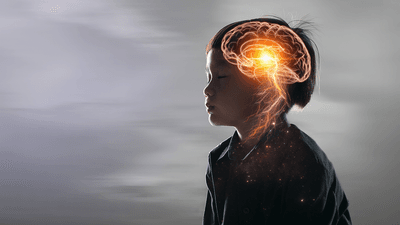


Twenty-five years ago, neuroscientist Christof Koch and philosopher David Chalmers were attending the Association for the Scientific Study of Consciousness (ASSC) when, after a few drinks in a German bar, they placed a bet.
Koch suggested the bet to his friend, staking a case of fine wine that within the next 25 years science would discover a signature of consciousness within the brain. Koch had been working with Francis Crick, part of the team behind the discovery of the structure of DNA. The two hoped that they may be able to find activity in particular neurons that related to conscious experience.
It was an optimistic bet on Koch's behalf, and maybe one he and his wine cellar hoped would be forgotten. But 20 years later, journalist Per Snaprud tracked down the two to see who was on course to win. Koch, working at the Allen Institute for Brain Science in Seattle, had continued research into consciousness.
At first, he and Crick thought they may have hit upon an easy answer in the claustrum, a region of the brain about which relatively little is known. As well as having a "widespread extensive connectivity with the entire cerebral cortex" and a role in higher order processing, stimulating the claustrum of an epileptic patient had an unusual effect on their mental state, termed a "disruption of consciousness".
"Stimulation of the claustral electrode reproducibly resulted in a complete arrest of volitional behavior, unresponsiveness, and amnesia without negative motor symptoms or mere aphasia," researchers wrote of the patient in a study.
However, further research on a patient with damage to this region found little change to conscious thought, suggesting it isn't the answer.
Koch and Chalmers have both conducted work in the intervening years looking at alternative hypotheses. The two leading theories into how consciousness arises, discussed at a reunion between the two at an ASSC meeting, are the integrated information theory (IIT) and global network workspace theory (GNWT).
Both theories give researchers an area of the brain to look at in more detail, with IIT believing signs of consciousness to be found at the posterior cortex. GNWT, which sees consciousness arising as information is broadcast through the interconnected brain, sees consciousness involving the prefrontal cortex.
Unfortunately for Koch, who is now down a few bottles of wine, studies that looked into this and were presented at the conference found that neither theory matched the data perfectly, according to Nature.
“This tells us that both theories need to be revised,” neuroscientist at the Max Planck Institute for Empirical Aesthetics in Frankfurt told Nature, while “the extent of that revision is slightly different for each theory”.