Technology
 PUBLISHED


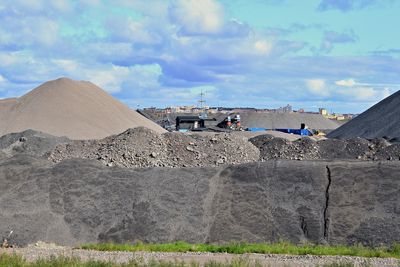


A Swedish mining company has announced the discovery of the largest rare earth oxides deposit in Europe, with 1 million tonnes of metal found beneath the ground in north Sweden. The state-owned company, LKAB, is in luck as the deposit is very close to its Kiruna iron mine, which is the largest of its kind.
Spokespeople for LKAB said it is not just good news for their profits, but good news for the world’s goal of becoming net zero.
“This is good news, not only for LKAB, the region and the Swedish people, but also for Europe and the climate,” said Jan Moström, President and Group CEO of LKAB, in a statement.
“This is the largest known deposit of rare earth elements in our part of the world, and it could become a significant building block for producing the critical raw materials that are absolutely crucial to enable the green transition. We face a supply problem. Without mines, there can be no electric vehicles.”
Rare earth oxides is a collective term for 17 different soft heavy metals that have integral roles in electronics, magnetic materials, and (more recently) renewable energy generation. As such, demand for these metals has skyrocketed in recent years, as electronic chipmakers struggle to meet it and the generation of electricity from wind and solar attempts to catch up to fossil fuels.
Despite the demand, Europe has no rare earth mineral mines and China continues to be the predominant supplier globally. In keeping with the European Union’s desire to be independent from China, LKAB believes the mine will ensure Europe becomes more self-sustainable.
While the prospect is exciting, creating a huge mine is not a quick task, even when positioned next to an existing one. LKAB has already created a large drift over the deposit and will continue probing to understand the extent of it, in the hopes of submitting an application to mine in 2023.
“We are already investing heavily to move forward, and we expect that it will take several years to investigate the deposit and the conditions for profitably and sustainably mining it. We are humbled by the challenges surrounding land use and impacts that exist to develop this into a mine and that will need to be analysed to see how to avoid, minimize and compensate for it. Only then can we proceed with an environmental review application and apply for a permit,” continued Moström.
“If we look at how other permit processes have worked within our industry, it will be at least 10-15 years before we can actually begin mining and deliver raw materials to the market.”



 2
2