Health and Medicine
 PUBLISHED




For those who aren’t affected by autism, the condition can be very hard to understand. Many people know the condition comes with a difficulty in communicating with others and a lack of social understanding.
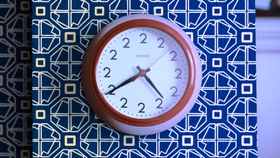
However, many people with autism also suffer from sensory sensitivity. While most people can process background stimulation (such as people chatting or noisy cars), people with autism struggle to integrate and ignore this sensory information – lights are more piercing, sirens are more shrill, taps sound like thuds, clock ticks sound like hammers and patterns become dazzling. This hypersensitivity can even extend to tastes and smells, which become overpoweringly intense. The experience can obviously be very distressing.
This video, made by The National Autistic Society, provides some insight into what life may be like for those with autism who have sensory sensitivity.
Autism spectrum disorder (ASD) affects one in 68 people in the U.S., and includes a wide range of symptoms and levels of sensory sensitivity. Other individuals with autism may have a very different sort of experience: an under-sensitivity of their senses. This, as it sounds, is the opposite of hypersensitivity. For more information on autism and associated conditions such as Asperger’s syndrome, check out their website.