Health and Medicine
 PUBLISHED
 3
3


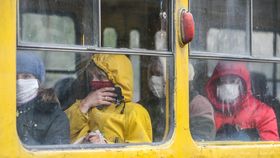


Saliva can travel up to 6 meters (over 19 feet) in 5 seconds from a cough if it’s caught on a light breeze, according to new modeling by physicists.
Much of the science behind the airborne transmission of viruses – especially the coronavirus that causes Covid-19 – is still uncertain, so you should tread carefully before applying the findings to the current disease outbreak. With that in mind, the researchers say their findings suggest the official warnings to “stay 2 meters apart” from others might not be insufficient to prevent the spread of some airborne diseases.
Reporting in the journal Physics of Fluids, scientists ran a computer model that simulated the travel of 1,008 airborne saliva droplets while accounting for variables like pressure, fluid velocity, temperature, droplet mass, and droplet position.
By their workings, a cough could eject droplets of saliva across the air from up to 6 meters (over 19 feet) if it is propelled by a light 4 kilometer per hour (2.5 mph) wind. If the wind is stronger, at around 15 kilometers per hour (9 mph), then some particles will reach the 6-meter mark, although to a lesser extent as the saliva mist is dispersed more.
"In open spaces, airborne droplet carriers can travel significantly further than the 2 meter [6 foot 6 inches] recommended distance depending on the wind speed and the environmental conditions," Professor Dimitris Drikakis, study author from the University of Nicosia in Cyprus, told IFLScience. "This is an important finding, and both citizens and policy-makers should be aware of it."

However, there are few things that need to be stressed before applying these findings to the airborne transmission of viruses, such as SARS-Cov-2, the coronavirus that causes Covid-19. For starters, there may be other variables and environmental factors that are not fully accounted for in the computer models. Most importantly, the modeling is simply looking at how saliva particles are transported and the evaporation of a human cough. It doesn’t look at the viability of a virus as it travels through the air. It’s unclear how high the “viral load” would be in these saliva droplets, especially once they reach 6 meters (over 18 feet) away from the infected person.
"We need to understand the droplet evaporation more deeply, especially at different environmental conditions," conceded Professor Drikakis.
"Moreover, the dosage and time needed for infection are not yet understood and may vary from one person to another. These factors need to be studied," he added.
Widely speaking, the airborne transmission of viruses is not fully understood. Both the US Centers for Disease Control and Prevention and the World Health Organization now state SARS-CoV- 2 is spread by respiratory droplets produced when an infected person coughs, sneezes, or talks. The extent of this method of transmission, however, remains a topic of ongoing discussion.