Health and Medicine
 PUBLISHED


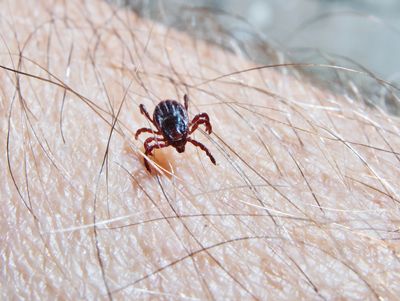


Multiple ticks across the UK have been found to carry tick-borne encephalitis virus, and one human case has been confirmed, making it the first case of the rare virus in the UK. Health officials now warn the public to stay away from ticks where possible, as this adds to the potentially dangerous diseases they may carry.
The announcement comes from a new risk assessment by the UK Health Security Agency.
Tick-borne encephalitis (TBE) is a viral disease caused by the tick-borne encephalitis virus (TBEV), a member of the flavivirus family. The disease is primarily transmitted through the bite of infected ticks, but can also be transmitted through the consumption of unpasteurized milk from infected animals. While most cases are asymptomatic, the virus can cause inflammation of the brain, leading to symptoms such as fever, headache, nausea, vomiting, muscle weakness, and confusion. In severe cases, TBE can lead to permanent neurological damage or even death.
In recent years, TBE has become an emerging public health concern in some regions due to increasing incidence and expanding geographic distribution. It is most common in Russia and parts of China and Japan, but it is also regularly found across Europe. Despite this, there have only been three probable cases in the UK since 2019; the most recent case in 2022 is the only one to be confirmed as TBE.
"The virus has clearly become established in multiple places in the UK, most plausibly as a consequence of infected ticks traveling on migrating birds," Roman Biek, Professor of Disease Ecology and Molecular Epidemiology at the University of Glasgow, explained in a statement. "The opportunities for this to happen would have existed for a long time. So why these introductions were successful only recently, as suggested by the data available so far and similar timelines of emergence in other European countries, is not clear. Identifying the environmental conditions, or changes to these conditions, that played a role in TBEV emergence, is an obvious research priority right now."
The risk to the general public in the UK is still considered to be very low, but health officials urge caution around areas with many ticks and to use long clothing and take preventative measures.
“Our surveillance suggests that tick-borne encephalitis virus is very uncommon in the UK and that the risk to the general population is very low,” Dr Meera Chand, Deputy Director at UKHSA, said in a statement.
“Ticks also carry various other infections, including Lyme disease, so take steps to reduce your chances of being bitten when outdoors in areas where ticks thrive, such as moorlands and woodlands, and remember to check for ticks and remove them promptly.”