


 PUBLISHED
 1
1


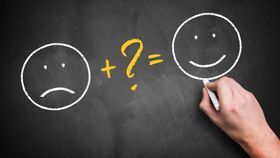


Autism spectrum is associated with finding it more difficult to assess the thoughts, emotions, and intentions of others on an individual basis. A Yale University team made the first large-scale test of whether this extends to struggling to predict the behavior of people in groups. To their surprise they found the opposite; people with autism are actually better than the rest of the population at predicting collective responses.
When Greta Thunberg described her autism as a “superpower” allowing her to see important things more clearly, opponents of climate action seized on another chance to mock their target. As usual, however, Thurnberg has the science on her side, even though it hadn't been published when she made the statement.
Now it has. Research published in the Proceedings of the National Academy of Sciences reports on the assessment of 6,595 people for traits associated with autism, followed by testing for social psychological skills. The more likely someone was to be diagnosed with autism, the better they were at predicting collective behavior. In other words, although a person with autism is less likely to be able to watch an individual and say whether or not they are happy, they are more likely to predict the outcome of psychological studies as to whether certain situations make most people happier.
There are limits to the conclusions that can be drawn from this work; among other things, only those within the normal intelligence range were included. PhD student Anton Gollwitzer and co-authors also note people with autism spectrum average only a little higher on the social psychological tests they designed, in contrast to much lower scores on judgments of individuals. On the other hand, the results are robust enough to make it very unlikely the effect is the product of small or unrepresentative sample sizes. People from 104 countries took part and the findings were consistent across all nations with more than 100 participants.
To try to understand the reasons for their unexpected finding, Gollwitzer and colleagues conducted a more in-depth study on 400 individuals. The findings stood up independently of participants having taken courses on the topic, making it less likely those involved had studied psychology in an effort to overcome the challenges they face, and picked up some knowledge of social psychology in the process.
Instead, the authors found people who are good at predicting social psychological results also tend to have an intuitive talent for physics and interests in engineering, both measures of skill at systemizing. “Our results indicate that person perception and generalized social prediction are divergent social-cognitive skills that are predicted by different processes,” the authors write.
Besides proposing paths for future research to better understand the differences between the two skills, the paper proposes these social predictive skills can be drawn on by people with autism struggling with one-on-one interactions
