Health and Medicine
 PUBLISHED
 1
1


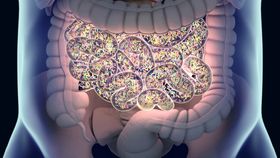


Although it might make you feel squirmy, your gut is teeming with life. Millions of tiny bacteria and viruses call the intestines "home", with various species vying for the wealth of nutrients that exists down there. Most of these species are extremely beneficial to your health, with links between mental and physical health being unearthed constantly.
Now, scientists have discovered there may be more diverse life there than we thought – a lot more.
In a new paper published in the journal Cell, researchers have discovered 140,000 new virus species living in the human gut, over half of which have never been seen before. The authors believe that the new characterization will open new doors into understanding how our gut microbiome affects our health.
Do not be alarmed, however. Although the recent pandemic has given viruses a bad reputation, these are not the same type.
“It’s important to remember that not all viruses are harmful, but represent an integral component of the gut ecosystem," said Dr Alexandre Alemeida, a postdoctoral fellow at EMBL-EBI and the Wellcome Sanger Institute, in a statement. "For one thing, most of the viruses we found have DNA as their genetic material, which is different from the pathogens most people know, such as SARS-CoV-2 or Zika, which are RNA viruses. Secondly, these samples came mainly from healthy individuals who didn’t share any specific diseases. It’s fascinating to see how many unknown species live in our gut, and to try and unravel the link between them and human health.”
Many of these are a type of virus called bacteriophage. These are completely harmless to humans, but instead choose bacteria as their prey, infecting and replicating within them. Bacteriophage play a huge role in regulating the number of bacterial cells in the human gut and imbalances in phage may be directly linked to imbalances in gut bacteria.
Of the new viruses, the most common was a new group of viruses thought to have a common ancestor, which was dubbed Gubaphage. Gubaphage appears similar to the most prevalent phage in the human gut, crAssphage (cross-assembly phage), in which bacteria it infects, although it requires more research to understand Gubaphage’s role.
The gut microbiome has become a hot topic recently, with a number of studies linking gut bacteria imbalances to diseases ranging from depression to cancer. The flourishing system of bacteria in the intestines act as both protectors against pathogens whilst interacting with the immune system, providing a whole new range of metabolic and immunological functions. Current studies are continuing to characterize the microbiome, including understanding the mechanisms behind its involvement in both infectious and non-infectious diseases.