


 PUBLISHED

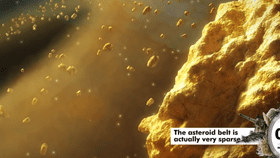


Some of the scientific illustrations you grew up studying may not have been exactly accurate. This was either to emphasize a point, a common misconception, or because the representation would have been, well, too vast for the pages of a textbook.
Here are some questions to reconsider: Are raindrops more similar in shape to teardrops or hamburger buns? Can Earth as an oblate spheroid—a sphere squashed at its poles and wider at the equator—be accurately portrayed on a flat world map? What about the scale of our solar system?
Watch the Mental Floss video to find out.
