


 PUBLISHED
 1
1

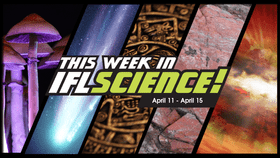


Psilocybin Increases Connectivity In Brains Of Depression Patients
Brains scans reveal why psilocybin may work as such a potent antidepressant. The active compound in magic mushrooms helps to unlock rigid patterns of brain connectivity associated with depression, scientists say. Psiloybin has been shown to trigger a more flexible and expansive brain state that correlates with reductions in depressive symptoms.
Largest Comet Ever Seen Confirmed By Hubble – And It’s Heading This Way
Astronomers have carried out new observations of the giant Comet Bernardinelli-Bernstein using the Hubble Space Telescope and have now confirmed what they suspected from previous data: this object is truly something enormous when it comes to frozen space rocks. In fact, it has the largest comet nucleus ever discovered, about the size of Rhode Island.
Earliest Evidence For Maya Calendar Found In Guatemalan Pyramid
The Maya calendar dates back further than previously recognized, a mural found in Guatemala dating back more than 2,220 years reveals. The relic indicates that other aspects of Maya culture originated at least 150 years earlier than has previously been acknowledged.
Diverse Life May Have Existed Just 300 Million Years After Earth Formed
If diversity is the spice of life then our planet may have become spicy at a remarkably young age. After analyzing tiny filaments in an ancient chunk of seafloor sediment, scientists conclude that complex microbes may have existed 300 million years earlier than thought. Dating to just 300 million years after Earth formed, the evidence suggests similar primordial ecosystems might emerge equally quickly on other planets.
Astronomers Have Spotted The First Precursor To A Supermassive Black Hole
There’s a supermassive black hole at the center of almost every galaxy. Each of these cosmic objects weighs millions, if not billions, of times the mass of our Sun. But their formation is an unsolved mystery. Now, astronomers have spotted a unique object that they think is an evolutionary "missing link" between star-forming galaxies and the earliest supermassive black holes.
Featured:
What Is Exploding Head Syndrome? Is It As Dangerous As It Sounds?
Despite the gory misnomer, Exploding Head Syndrome doesn’t actually make your head explode (sorry horror fans), but for those who have the condition, it’s definitely disturbing.
