


 PUBLISHED

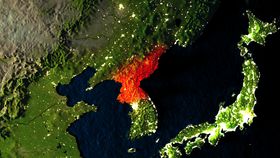


The mountain above North Korea’s main nuclear test site Punggye-ri has likely collapsed following a nuclear test last fall, sparking concerns about radioactive fallout and environmental catastrophes, according to geologists at the University of Science and Technology of China.
It comes less than a week after North Korea's leader Kim Jong-un announced the reclusive nation would immediately suspend nuclear and missile tests and scrap its testing site ahead of meetings with the United States and South Korea, now suggesting an alternative reason behind the site’s closure.
“The onsite collapse calls for continued close monitoring of radioactive materials from the nuclear test site,” the geologists wrote in a study that will appear in an upcoming issue of Geophysical Research Letters.
Nuclear explosions release enormous amounts of heat and energy. Following a nuclear bomb test on September 3 of last year, the researchers say the “explosion created a cavity and a damaged ‘chimney’ of rocks” out of nearby Mount Mantap that could be leaching radioactivity. Estimated at 100 kilotons, the blast was the sixth test 10 times stronger than any of the previous five. For comparison, the bomb that was detonated over Hiroshima in 1945 was 15 kilotons. About 8.5 minutes after the explosion, a magnitude 6.3 earthquake was recorded with four subsequent earthquakes generated in the following weeks.
By collecting high-quality seismic data and examining satellite imagery before and after the tests, scientists were able to determine where these earthquake swarms occurred and that they were indeed caused by the tests. Past tests have altered the area’s capacity to withstand tectonic stress to the extent that previously inactive tectonic faults have reached a state of “critical failure”. Further disturbances and future nuclear testing in the region could generate more destructive earthquakes.
“Given the history of the nuclear tests North Korea performed beneath this mountain, a nuclear test of a similar yield would produce collapses in an even larger scale creating an environmental catastrophe,” says the paper.
The findings confirm a study published last month that found similar results, suggesting the tectonic events were in fact man-made and not the result of naturally occurring tectonic activity. The paper described the aftershock as most likely a “rapid destruction of an explosion-generated cracked rock chimney due to cavity collapse.”
No radioactive materials have been collected along the North Korea-China border, but Chinese officials fear radioactive dust may be leaching through cracks and holes in the damaged mountain.
[H/T: Associated Press]
