


 PUBLISHED


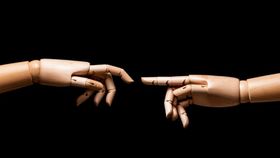


Some dubious choice of words has landed the scientific journal PLOS ONE in hot water after a study made numerous references to a “Creator.”
A group of Chinese scientists published their research in the peer-reviewed, open-source journal on January 5. The study was a scientific paper that looked at the biomechanics of the human hand. However, the paper mentioned “the Creator” in the paper’s abstract and then twice in the study.
One of the sentences read: “Hand coordination should indicate the mystery of the Creator’s invention.”
The word’s association with creationism and intelligent design has spurred a stream of negative comments on the PLOS ONE article, as well as on Twitter, with many people demanding that the “shameful” and “unacceptable” paper be redacted or removed.
Just found out @PLOSONE published a paper with “evidence” about some “creator”. If not retracted immediately, I will resign as editor.
— Anxo Sánchez (@anxosan) 3 March 2016
The study’s Chinese authors have since come out to say the wording was a mistranslation, suggesting that they muddled up the words “nature” and “Creator.”
Ming-Jin Liu, the lead author of the paper and a researcher at Huazhong University of Science and Technology in Wuhan, China, wrote in the study’s comments on March 3:
“We are sorry for drawing the debates about creationism. Our study has no relationship with creationism. English is not our native language. Our understanding of the word Creator was not actually as a native English speaker expected. Now we realized that we had misunderstood the word Creator. What we would like to express is that the biomechanical characteristic of tendious connective architecture between muscles and articulations is a proper design by the NATURE (result of evolution) to perform a multitude of daily grasping tasks. We will change the Creator to nature in the revised manuscript. We apologize for any troubles may have caused by this misunderstanding.”
Mistranslation or not, many are still outraged that the word managed to get past both the peer-review process and editors.
Thanks @PLOSONE for feeding arguments to those who say open access = lower quality. The #Creatorgate article is a harmful disgrace. ಠ_ಠ
— Simon (@simonmd) 3 March 2016
In a comment posted on March 3, a PLOS ONE admin apologized for the publication’s errors and conceded that the peer-review process didn’t “adequately evaluate several aspects of the work.” They went on to say that after an internal review and advice from two experts on their editorial board, PLOS ONE will retract the article as soon as possible.
IFLScience has reached out to PLOS ONE for comment on the issue, however they did not reply by the time of this article's publishing.
