


 PUBLISHED


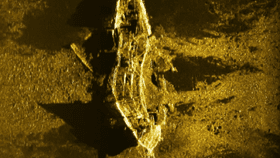


It’s been almost two years since the mysterious disappearance of the Malaysia Airlines Flight 370. While luck continues to elude the multinational search parties, the Australian wing of the search has managed to stumble across a lost 19th-century shipwreck.
The ship was found on December 19, 2015, along the Indian Ocean’s seabed by the Australian Transport Safety Bureau (ATSB). On January 2, they managed to capture high-resolution sonar images, which have been released in a recent report.
With the help of the Shipwreck Galleries of the Western Australian Museum, they identified the ship as a steel or iron vessel from the early 1800s.
This isn’t the first treasure found from the MH370 search. In May of last year, the ATSB found another – albeit less preserved – shipwreck. Seven months earlier in 2014, they also released images on a range of underwater volcanoes, canyons and troughs.
Chinese, Malaysian and Australian authorities are just over two-thirds of the way through their 120,000-kilometer-squared (46,332-mile-squared) search in the south Indian Ocean. According to the BBC, this process involves three walking-paced ships that methodically scan the seafloor. Although the search continues, authorities say they are likely to give up before the end of 2016 unless there’s a major breakthrough.
