


 PUBLISHED


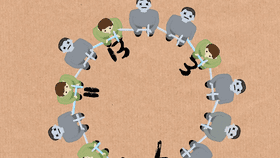


The Josephus problem is a puzzle dreamed up by a Jewish soldier nearly 2,000 years ago that continues to test the minds of mathematicians and computer scientists to this day. Fortunately, Numberphile is here to explain it all.
This theoretical mind-game is said to have been created by Jewish historian Flavius Josephus in the 1st century CE during the Roman Siege of Yodfat. The story goes that he was sitting in a circle with 40 other Jewish soldiers. With the pissed off Roman soldiers outside, they decided to commit to a death-pact in which they stabbed the person to their left. Going clockwise around the circle, the next remaining alive person would do the same, and so on, until there’s just one surviving person left. Is there a way you could ensure that you are that last person alive? And what if there’s a different number of people in the circle?
As mathematician Daniel Erman from the University of Wisconsin-Madison explains in this new video from YouTube channel Numberphile, if you label each soldier with a number (number 1 being the first stabber), you’ll quickly notice some rather clear patterns emerging.
First of all, the surviving person is also an odd number, regardless of how many soldiers are in the circle. Pry a little deeper and you’ll find more and more patterns that, if you apply them correctly, can lead to you to the surviving place in the circle.
Erman also ends on a rather cool note: If you work out the problem using a binary trick, you should be able to get the answer fairly quickly.
