


 PUBLISHED




From insanely brutal death rituals to peculiar astronomical monoliths, the archaeological discoveries made on the Orkney Islands in Scotland are constantly providing an insight into the Stone Age.
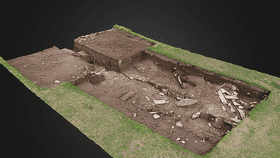
Just this week, archaeologists from the University of the Highlands and Islands Archaeology Institute have unearthed a massive, mysterious stone structure buried beneath a Neolithic "rubbish dump" at the Ness of Brodgar excavation site.
Although much of the wall has been robbed over its millennia of existence, the researchers are excavating this 10-meter-wide (33-foot) structure to reveal its story. Further digging is required, but it’s even being speculated that it could be a chambered tomb from around 3,000 BCE, according to the BBC.
Aerial drone footage of the site by James Robertson from Orkney Sky Cam
Within the Ness of Brodgar, earlier digs have previously found a trove of different sized structures, tools, pots, rock art, seaweed, animal bones, and human bones. The 2.5-hectare (6.2-acre) site has hence been dubbed Scotland’s largest Neolithic “rubbish dump”. How or why the structure eventually become covered by this Neolithic trash heap is not yet understood.
"The sheer size and scale of the stones unearthed are unprecedented on this site.The way the stones are built into the construction is also unique to the Ness. This all suggests that they may have been re-used and taken from elsewhere,” said site director Nick Card, Archeology Orkney reports.
"Perhaps they may be part of a stone circle that pre-dates the main Ness site. It is all a bit of mystery and we won't know more until we do more work," he added.
Archaeologist Dr Hugo Anderson-Whymark has created this interactive 3D model on Sketchfab, complete with detailed annotations, so you can explore the site yourself right here.
