


 PUBLISHED
 10
10


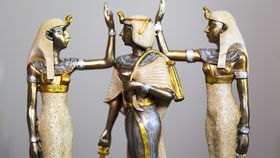


Archaeologists at the University of Hawaiʻi at Mānoa have decoded and recreated millennia-old perfume worn by the ancient Egyptians, perhaps even the famed Queen of the Nile herself, Cleopatra.
The recipe for the scents was drawn from a series of ancient Greek texts that speak of two Mendesian and Metopian perfumes. Along with a sprinkling of other fragrant oils and natural ingredients, the base note of the two perfumes is myrrh, a tree resin obtained from a flowering plant grown in parts of Africa and Asia.
"The Mendesian is myrrh based and has a very pleasant smell like a light incense. The other perfume, Metopian, is much muskier and harsher and actually my preferred perfume," Dr Jay Silverstein, an archaeologist from the University of Tyumen who worked on the project, told IFLScience.
“While someone like Cleopatra, a known aficionado of perfume who would have likely had hundreds of perfumes, the texts suggest that the Mendesian would have been one of her most valued,” he explained.
In the hopes of getting even closer to the authentic pong of ancient Egypt, the team is also looking to carry out scientific analysis on their findings from excavations at Tell-El Timai, a site near the Egyptian capital of Cairo that dates back to 300 BCE.
In 2012, they discovered a house in the ruined city that contained a hoard of silver coins, as well as gold and silver jewelry, near to a number of kilns once used to create perfume bottles. This led the team to believe that the house once belonged to a perfume merchant, so they're currently using chemical analysis on vessels found near the structure to see if there are any identifiable traces of the liquids once contained inside.
Perfume was profoundly important in the ancient world, Much more than just a pleasant odor to spray on before a date, it played a deeper role in their ideas of life, death, and the afterlife.
“Perfume had much more power than we usually ascribe to it today. It was important in rituals, for healing, and even associated with immortality so it was desired not just for sumptuary purposes, but the scents had the power to improve the quality of your life and likely even your afterlife,” added Dr Silverstein.
Besides anything else, Cleopatra – the last active ruler of the Ptolemaic Kingdom of Egypt, who ruled from 51 to 30 BCE – was also said to bathe in soured goat's milk and powdered her face with dried crocodile dung. So, perhaps a pleasant smelling distraction wouldn't go amiss either.
If you fancy catching a sniff of the ancient scent with your own nose, the perfume is on display at the National Geographic Museum’s exhibition “Queens of Egypt” in Washington DC until September 15, 2019.
