Nature
 PUBLISHED




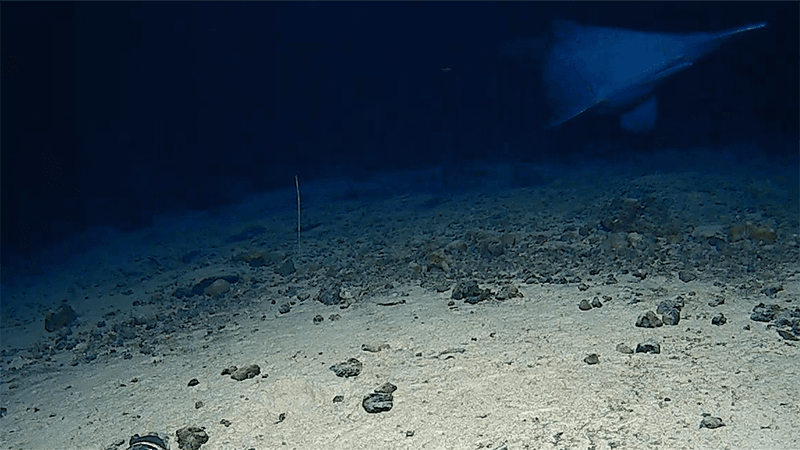
They say just 0.001 percent of the deep ocean has been directly observed, representing a speck on our planet that’s just larger than Rhode Island. It’s hardly surprising, then, that when we do take a jaunt into the deep sea, scientists discover some remarkable new species.
The rest of this article is behind a paywall. Please sign in or subscribe to access the full content.Most recently, that included the Nippon Foundation-Nekton Ocean Census expedition that set sail in June 2025. In partnership with the Japan Agency for Marine-Earth Science and Technology (JAMSTEC), it discovered 38 new species and identified a further 28 candidates from across two of Japan’s most understudied deep-sea regions: the Nankai Trough and the Shichiyo Seamount Chain.
“The discoveries made in the Nankai Trough and the Shichiyo Seamount Chain remind us how little of our ocean has truly been explored,” said Mitsuyuki Unno, Executive Director of The Nippon Foundation, in a statement sent to IFLScience.
“By supporting missions like this, The Nippon Foundation is helping to open a new frontier of knowledge for Japan and for humanity. Each new species discovery is a step toward understanding, valuing, and ultimately safeguarding our shared ocean.”
Setting sail on the JAMSTEC research vessel Yokosuka, scientists prepared to dive into the depths aboard the Shinkai 6500 – a crewed submersible that was able to return more than 528 specimens. Once they were all back on land at JAMSTEC HQ, taxonomists from across the globe gathered for a Species Discovery Workshop. Now, the results are in, giving rise to two breakthrough studies.
JAMSTEC researcher Dr Chong Chen led a survey published in the journal Ecosphere that reveals a five-fold increase in known biodiversity in the Nankai Trough, which is one of Japan’s most geologically active deep-sea regions. Before, we knew of just 14 animal species inhabiting these cold seeps, but the new census documented 80. It includes mollusks, annelids, arthropods, nemerteans, echinoderms, cnidarians, and a bryozoan, and marks the most comprehensive biological survey of the region ever undertaken.
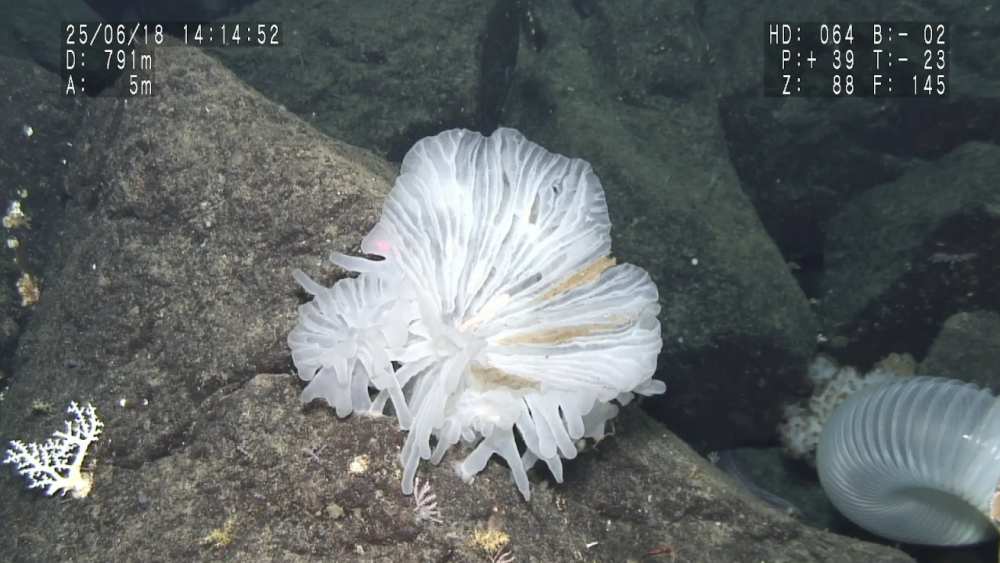
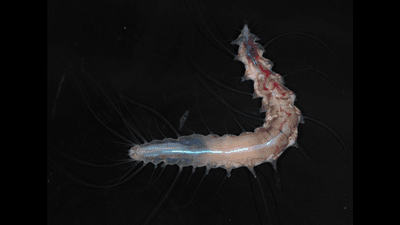
The second study, published in the Zoological Journal of the Linnean Society, was led by Dr Naoto Jimi and highlights two polychaete worm species – Dalhousiella yabukii and Leocratides watanabeae – that have evolved to live “in a glass castle”. That castle is the body of a glass sponge – so named because they build their intricate, mesh-like skeletons out of silica, which is the same material used to make glass. The castle sponge could even be a new-to-science species, though it hasn't yet been named.
Both studies highlight the potential of exploring previously understudied areas like the Shichiyo Seamount Chain, which is now recognized as a region of special interest for Japanese marine science. Makes you think what we might discover if we tackled that remaining 99.999 percent.