Technology
 PUBLISHED


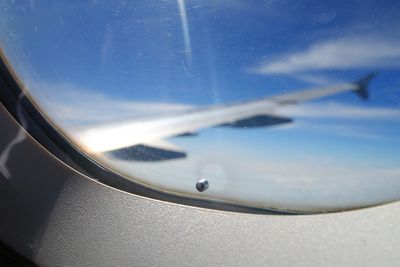


If you’ve ever been sat on a mind-numbingly long flight, and you were fortunate enough not to get the middle seat, you’ve perhaps wondered why the airplane window has a tiny, mysterious hole near the base. It’s known as a breather hole or bleed hole – and it's there for a very good reason.
The rest of this article is behind a paywall. Please sign in or subscribe to access the full content.When a plane cruises at 10,600 meters (35,000 feet) above Earth's surface, outside air pressure drops to about 1.5 kilograms (3.3 pounds) per square inch, far too low for a human to remain conscious. To keep passengers safe and not unconscious, the cabin is artificially maintained at around 3.6 kilograms (8 pounds) per square inch.
This creates a physical strain. Because high pressure always seeks out low pressure, the air inside the cabin constantly "pushes" against the cabin's inner walls. The windows, being weaker than the metal hull, are vulnerable points where stress could concentrate, so engineers designed them with a simple, special trick.
How do airplane windows cope with pressure?
To deal with the problem of pressure, windows on most commercial planes are constructed with three layers of strong, thick, synthetic resin. Only the outer and middle panes are truly structural, designed to withstand extreme temperature changes and the large pressure difference between the cabin and the outside world.
The innermost pane (the one you can touch from your seat) is primarily there to protect the other two panes from scratches, dirt, and bumps caused by passengers. It’s essentially a dust cover, and it isn't tightly sealed like the other two layers, so some air can flow around it. For the purposes of this explanation, you can forget about it.
This is where the bleed hole comes in. Typically found on the middle pane, its job is to allow cabin air to flow into the small gap between the middle and outer layers. This ensures the cabin pressure is primarily placed on the outer pane, which is designed to be the strongest. If the outer pane were ever to fail — which is an extremely rare occurrence — the middle pane is still sturdy enough to take over the job of bearing the pressure.
The tiny hole also helps regulate temperature in the gap between the panes. As the plane ascends or descends, it's subjected to extreme changes in temperature. If the air pocket between the panes were completely sealed, thermal expansion or contraction of trapped air could create additional stress on the window layers. By allowing small amounts of air to seep through the hole, the pressure inside the gap can adjust slightly with temperature changes, reducing the risk of cracking or warping.
It also serves as a mini vent that allows moisture trapped between the panes to escape, preventing the windows from fogging up or frosting over (although you can occasionally see the hole with a few ice crystals gathered around it).
All in all, it's a surprisingly simple but very effective solution.
Why do airplanes have rounded windows?
Speaking of airplanes and pressure, this is also why the windows have rounded corners, not right-angled corners. The softened shape helps distribute pressure evenly across the window, reducing stress concentrations and the likelihood of cracking.
So, if you’re a nervous flyer, rest assured that a lot of thought has gone into the safety of the windows. It might look like a flimsy bit of plastic with a hole in it, but these structures are far sturdier and more sophisticated than they might first appear.


 1
1