Technology
 PUBLISHED


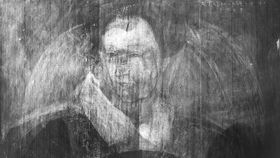


While carrying out research on a 16th-century portrait, curators unexpectedly stumbled across a ghostly unfinished image of a beheaded Scottish queen.
The National Galleries of Scotland and the Courtauld Institute of Art in London recently carried out X-ray imaging on a painting of Sir John Maitland, 1st Lord Maitland of Thirlestane, completed by the Dutch artist Adrian Vanson in 1589. The painting, shown below, will be on display at a free exhibition, Art and Analysis: Two Netherlandish Painters working in Jacobean Scotland, at the National Galleries of Scotland.
The X-radiography technique can penetrate through paint layers but is blocked by pigments containing heavy metals, such as lead-white paint. Conservator Dr Caroline Rae, while scanning the painting, picked up on a lead white pigment behind the portrait, revealing a ghost-like outline of a woman.
Dr Rae believes the hidden portrait shows Mary Stuart, or Mary, Queen of Scots as she's known, based on similarities to other paintings of the controversial queen made throughout her lifetime. But why would an artist paint over a monarch?
Mary, Queen of Scots was a highly controversial figure. In 1567, her second husband Lord Darnley was found dead in the orchard of Kirk o' Field in Edinburgh, not far from the National Museum of Scotland. This scandal resulted in Mary's forced abdication, being imprisoned in England by her cousin Elizabeth I, whose throne she had once tried to claim, and eventually beheaded in 1587 for treason.
It seems that the artist Vanson decided to scrap his painting during this turmoil and scandal, instead settling for the slightly less controversial subject of Sir John Maitland.
“Vanson’s portrait of Sir John Maitland is an important picture in the National Trust collection, and the remarkable discovery of the unfinished portrait of Mary, Queen of Scots adds an exciting hidden dimension to it,” David Taylor, Curator of Pictures and Sculpture at the National Trust, said in a statement.
"It shows that portraits of the queen were being copied and presumably displayed in Scotland around the time of her execution, a highly contentious and potentially dangerous thing to be seen doing.”
Dr Caroline Rae added: “The discovery of this hidden portrait of Mary, Queen of Scots is an exciting revelation, not only as it adds to our knowledge of 16th century Marian portraiture and patterns of commission at the time, but as it aids in illuminating our understanding of Adrian Vanson, a Netherlandish émigré artist who came to Jacobean Scotland to seek a new life and quickly ascended to the status of Crown painter.”




 2
2