Technology
 PUBLISHED
 3
3


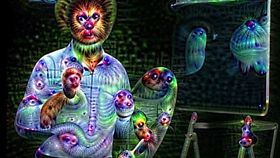


Ever wondered what it would be like for artificial intelligence to trip-out while watching Bob Ross paint a pretty picture?
This video was created by Alexander Reben, an engineer turned artist who uses technology to explore how machines are changing the human world and vice versa. It features an episode of the stoner-favorite television show The Joy of Painting with Bob Ross through Google’s neural network DeepDream.
DeepDream is a convolutional neural network, a style of computing inspired by the brain, that identifies and recognizes images and patterns. Most of the time, it's used to create nightmarish visions like these, but it’s also a surprisingly insightful visualization that shows how computers “think” in regards to tasks like image classification and speech recognition.
As Reben explains in the description: "This artwork represents what it would be like for an AI to watch Bob Ross on LSD (once someone invents digital drugs). It shows some of the unreasonable effectiveness and strange inner workings of deep learning systems. The unique characteristics of the human voice are learned and generated as well as hallucinations of a system trying to find images which are not there.”
Google made the code for DeepDream open-source, meaning there are plenty of videos, images, and apps that utilize it. Somebody has also published the code and a guide on GitHub, complete with a nightmarish rehash of Fear & Loathing in Las Vegas.