Technology
 PUBLISHED

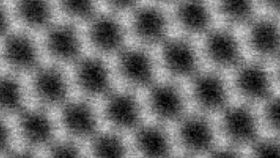


Super thin and crazy strong, the extremely conductive graphene is arguably everyone's favorite nanomaterial. Just last week, scientists generated electricity by dragging a drop of seawater across it. Now you can make the wonder material yourself in your own kitchen. All you need is a blender.
Researchers unveiled the process for producing hundreds of liters of a solution containing graphene sheets -- it’s so simple, it can be replicated using household appliances (but to be quite honest, you probably shouldn’t actually try this at home). The ability to make large quantities of the cheap, good-quality carbon sheet that’s only an atom thick will boost its deployment in various commercial applications, from low-cost flexible electronic displays to filler material in plastic bottles.
A team led by Jonathan Coleman from Trinity College Dublin transformed flakes of graphite into graphene solutions using commercially available tools: high-shear mixers and kitchen blenders. The shearing force generated by the rapidly rotating tools is intense enough to separate the layers of graphene in the graphite -- but without damaging their two-dimensional structure. Here’s the recipe, outlined by Nature:
- Ingredients: a liter of water, 10-25 milliliters of dishwashing detergent (Fairy Liquid was the team’s brand of choice), and 20-50 grams of graphite powder (which you can find in pencil lead).
- Step 1: Add all the ingredients into a high-power (400-watt) kitchen blender.
- Step 2: Turn the blender on for 10-30 minutes.
- Results: a batch of black liquid filled with a large number of micron-sized graphene flakes suspended in water.
 It works, in theory, although to be fair, the kitchen recipe was included in the study as sort of a joke. "It is a fun experiment, but it wouldn't get you very far," Coleman tells New Scientist. Plus, “I'm not sure I'd want to make a smoothie in a blender that has just been filled with graphite,” he admits to IEEE Spectrum. For the main work, the team actually used lab-grade surfactant and a lab mixer (pictured) to produce the well-dispersed solutions, in containers ranging in size from lab flasks to big metal tanks. And then they used a centrifuge to separate the flakes out of the black liquid.
According to their calculations, the technique is scalable to industrial levels: a 10,000 liter vat could produce 100 grams per hour. Although, the results aren’t quality enough for high performance electronics. They are, after all, flakes sloughed (or exfoliated) off of graphite bits -- like “sliding cards from a deck,” Coleman explains. But there’s a place for small flakes like these: The team tested the performance of their graphene sheets as conducting material in solar cells and batteries.
UK-based chemicals firm Thomas Swan has scaled the (patented) process up into a pilot plant. Its commercial director Andy Goodwin tells Nature that they hope to be making a kilogram of graphene a day by the end of this year -- sold as a dried powder and as a liquid spray.
The work was published in Nature Materials this week.
[Via Nature]
Images: CRANN/SuperSTEM (top), CRANN (all others)



 1
1