Space and Physics
 PUBLISHED




The future of space is reusable rockets, and after the landing successes of Blue Origin and SpaceX, other companies are investing more and more in advanced propelling systems to take humanity beyond Earth.
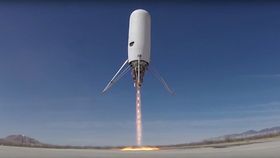
Aerospace start-up Masten Space System has just unveiled two new such vehicles, showcasing their ability to subtly manipulate the propulsions to control how the prototypes behave.
In a video, the company showcases the Xaero-B and Xodiac capabilities. The rockets can launch from the ground and hover in place multiple times a day, showcasing a very interesting versatility.
The prototypes can also lower themselves back down and land gently, which has already been demonstrated on a larger scale by SpaceX and Blue Origin’s rockets.
According to the company, Xaero-B can fly up to an altitude of 6 kilometers (3.7 miles) and it is capable of both ascending and descending very rapidly, a feat that other aircraft can’t accomplish. These capabilities, combined with precise landings, have helped Masten carved a niche in small rocket-powered vehicles.
The company won a NASA-sponsored competition in 2009, for a possible lunar lander, and it is involved with the Lunar CATALYST initiative, which aims to develop technologies leading to commercial vehicles that can deliver payloads to the lunar surface.
Masten has also been awarded almost $3 million by DARPA to developed an experiment spaceplane (XS-1) capable of flying 10 times in 10 days, carrying 1.4 tons of material to low-earth orbit with each flight. The ultimate goal of XS-1 is ultimately the same as both commercial and governmental space agencies: dramatically lowering the cost of sending material into space.
A video showing the ability of Xaero-B and Xodiac can be seen below.