Space and Physics
 PUBLISHED


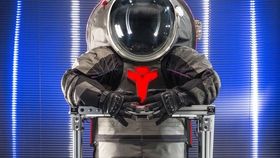


NASA is not wasting any time in developing new spacesuits to be used in a variety of locations for the Journey To Mars. Two new suits, PXS and Z2, were introduced in October and they have now reached the stage of working advanced prototypes.
The PXS, or prototype exploration spacesuit, was developed to improve performance on extra-vehicular activities (EVAs), spacewalks, in low-earth orbit or outer space. The suit aims to minimize the amount of equipment necessary for long duration EVAs. The PXS has a versatile approach to fittings. Many features are 3D printed, so the suit can be personalized for any crew member and for different types of EVAs.

The PXS pressurized, by NASA
The other prototype, the Z2 suit, is a prototype for EVAs on a planetary surface. The suit was designed by ILC Dover and it was constructed with Mars in mind. The suit sports advanced composite materials to achieve a light-weight, high-durability exterior which can hold off the harsh Martian environment. The suit allows the astronaut to move freely, get in and out of rovers, and collect samples. Again, the suit has adjustable features, so it can accommodate astronauts of different height and waist size.

Rear view of NASA's Z2 spacesuit.
Both suits are yet to be tested with their Portable Life Support System (PLSS) attached. The PLSS will incorporate a carbon dioxide removal system, which is able to also control the humidity of the suit. The system will be able to regenerate itself by simply being exposed to a vacuum, making it simpler to use than current ones, which need to be regenerated for 14 hours after every use.
The PLSS will also have an advanced oxygen regulator with 84 settings, which can be used to provide the best amount of oxygen to the astronauts as well as providing decompression sickness treatment directly in the suit.
The full suits should be tested by 2020, according to the engineers working on it. More pictures are available on the NASA's SuitUp website.