Space and Physics
 PUBLISHED


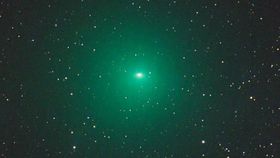


Two comets are currently cruising through the night sky for Earth-bound observers. If that wasn’t a good enough reason for you to have an early morning gaze at the stars, Comet 252P/LINEAR is putting on a particularly bold show.
Comet 252P/LINEAR, with its distinctive vivid green tinge, is glowing 100 times brighter than scientists expected as it moves into the view of the northern hemisphere. You can expect to see Comet 252P throughout the remaining days of March. Unfortunately, the Moon will be flooding the sky with light, making the comet harder to spot, but if you can be out in the morning at least an hour and a half before sunrise you will have a better chance. It’s recommended that you use some binoculars for the best view, although some observers have said they have managed to see the comet with the naked eye in darker skies.
As Sky & Telescope explains, that green hue is caused by molecules of diatomic carbon (C2) which are fluorescing in sunlight. Although the comet is mighty bright, you’ll only be able to get a real sense of the greenness if you view the comet through a telescope.
“Don’t expect Comet LINEAR to be obvious with a long tail,” said Kelly Beatty, Senior Editor of Sky & Telescope, in a statement. “Its light isn’t concentrated in a single point but instead is spread out in a soft round glow, larger than the Moon but many thousands of times dimmer.”
The comet had its closest flyby with Earth on March 21, just 5.3 million kilometers (3.3 million miles) away. Unfortunately, the comet is now moving away from Earth and the Sun. You can check out the movement of the comet in the chart below.

Image credit: SkyandTelescope.com