Space and Physics
 PUBLISHED


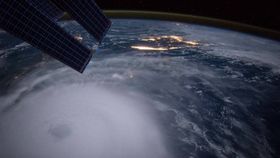


NASA has released this stunning picture of Hurricane Joaquin, taken by Astronaut Scott Kelly who tweeted: “Early morning shot of Hurricane #Joaquin from @space_station before reaching #Bahamas. Hope all is safe. #YearInSpace.”
Joaquin is currently crossing the northern Atlantic Ocean. lt left Bermuda on Sunday, although tropical storm conditions continued on the island. Before reaching Bermuda, Joaquin battered the Bahamas, where it was classified as a Category 4 hurricane.
According to NASA and NOAA satellites Aqua and Terra, which are tracking Joaquin, the maximum sustained winds are near 140 kph (85 mph). The satellite has shown how the hurricane is weakening in its move north, but it is still very much a hurricane with a small but undeniable eye. Infrared analysis from the AIRS instrument, which flies aboard Aqua, shows that most cloud tops within Joaquin have a temperature of -53 degrees Celsius (-63 degrees Fahrenheit) with some cloud tops close to the eye of the hurricane reaching -70 degrees Celsius (-94 degrees Fahrenheit). These data imply that powerful thunderstorms are still a danger, although Joaquin is not as powerful as when it hit the Bahamas.