Space and Physics
 PUBLISHED


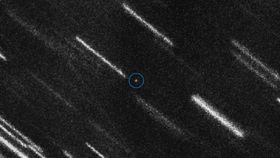


A building-sized asteroid will fly over our heads on Thursday, October 12, reaching a distance of 43,780 kilometers (27,200 miles) from the ground. We are not in any danger from this space rock and given our safety space agencies around the world will use this close encounter to test the global capabilities of recognizing and possibly defending our planet against a threatening asteroid.
This is the first time NASA will use a real object in one of its asteroid preparation drills instead of a simulated or theoretical object.
"This is the perfect target for such an exercise because while we know the orbit of 2012 TC4 well enough to be absolutely certain it will not impact Earth, we haven’t established its exact path just yet,” Paul Chodas, manager of NASA's Center for Near-Earth Object Studies, said in a statement.
“It will be incumbent upon the observatories to get a fix on the asteroid as it approaches, and work together to obtain follow-up observations than make more refined asteroid orbit determinations possible."
The object, known as 2012 TC4, is believed to be between 10 and 30 meters across (30 to 100 feet) and it’s moving at the break-necking speed of 14 kilometers (9 miles) per second. We don’t know what it’s made of and we don’t know its exact orbit, and for this reason astronomers around the world are conducting a detailed study of the object.
It will be quite difficult to observe 2012 TC4 unless you have a quite large telescope. At its closest approach around 7:41 CEST, it will be only a bit brighter than how Pluto appears to be and it will be better viewed in the South Pacific. But tracking it could be crucial to our future.