Nature
 PUBLISHED


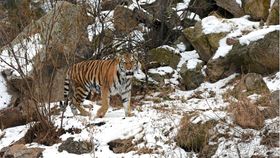


The shores of the Caspian Sea may once again be stalked by tigers, as Kazakhstan has now given the go-ahead for the big cats to be reintroduced some 70 years after the last animal was killed in the country. If successful, Kazakhstan will be the first country in the world to return tigers to the wild after they had become extinct.
The project is spearheaded by WWF-Russia, who is to supply $10 million to make it a reality. They aim to restore whole ecosystems in the Ili River floodplain and create enough suitable habitat to support the big cat after it is reintroduced. They currently plan on using tigers taken from the Russian Far East.
“We are grateful to the Kazakhstan government for the support and readiness to cooperate to carry out such an ambitious and ingenious program,” says Igor Chestin, WWF-Russia’s CEO, in a statement. “If this project will be brought to life, Kazakhstan will become the first country in the world to bring tigers back to its territory.”
Until late into the 20th century, Caspian tigers roamed from Turkey to the far western reaches of China, until habitat destruction and hunting drove them to extinction. For a long time. it was thought that the big cats were their own separate subspecies of tiger, until genetic tests on skins revealed that they were actually nearly genetically identical to the Amur tiger that still survives in Siberian Russia.
The initiative to reintroduce the big cats has been a long time in the works, and will be another few years in the making. The idea was first floated in 2011, when the WWF released a new report discussing the suitability of returning tigers to the forests of Kazakhstan. However, this had to quickly be shelved due to the complicated economic situation in Russia and Kazakhstan that stalled progress.
While the green light has finally been given, the reintroduction will not be a quick process. This will be the first time that a country has ever reintroduced a large predator back into the wild, and there will be a lot to achieve before it can be done. The government is looking to create a new national reserve around the Ili River, as well as restore the forests and ensure the prey base – mainly wild pigs and deer – are sufficient to support tigers before they are released.
“It will be years before tigers appear on this territory because the territory needs to be specially prepared,” Chestin said at a press conference. Not only that, but the people living in the region in which the animals are set to be reintroduced will also need to be educated and reassured.