Nature
 PUBLISHED


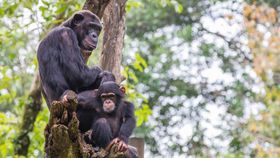


After years of living in a research laboratory, hundreds of chimpanzees are being moved to spend the rest of their lives in a sanctuary.
Starting this June, 220 chimpanzees from the University of Louisiana at Lafayette's (ULL) New Iberia Research Center (NIRC) will begin the move in their established social groups to a 135-hectare (236 acres) sanctuary in Blue Ridge, Georgia. The process, which is expected to go on for “several years,” is a collaborative effort between the university and a nonprofit organization called Project Chimps.
“We’re making history here,” said Sarah Baeckler Davis, the founder of Project Chimps. “We’re thrilled to partner with NIRC on this retirement of so many chimpanzees. It’s an unprecedented collaboration and a momentous occasion for chimpanzees.”
The scientific community in the U.S. appears to have undergone a shift recently on their views on using non-human primates in biomedical studies. Late last year, the United States National Institutes of Health announced it was shutting down all of its chimpanzee medical research programs.
According to the Associated Press, the University of Louisiana say "the vast majority" of chimpanzees at the facility were never involved in any research and had daily access to the outside world.
However, many feel there is still much more to do. The NIRC is a 45,000-square-meter (485,000 square feet) facility, dedicated to housing and testing primates. This includes many species of macaque and cercopithecine monkeys, of which there are no known plans to retire. The facility still houses well over 5,000 non-human primates, which serve as test subjects for preclinical trials of pharmaceuticals and biotechnology products.
"It is high time that the 220 chimps at the University of Louisiana are retired, and it is a positive step that ULL is shouldering at least part of the financial burden for these primates," Michael Budkie, executive director of Stop Animal Exploitation Now, said according to Associated Press. "But what about... the other 5,000 primates at ULL?"