


 Nature
 PUBLISHED


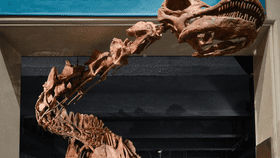


With the likes of Godzilla, King Kong, and the Stay Puft Marshmallow Man, colossal creatures go hand in hand with New York City. However, its latest giant’s introduction was a lot more civilized. On the morning of January 14, New York’s American Museum of Natural History unveiled its new resident to packed crowds: a life-sized skeleton cast of a titanosaur.
This titanosaur is 37 meters (122 feet) long, stands 6 meters (20 feet) tall and is thought to have weighed 63 tonnes (70 tons). This is so large, the cast doesn’t fit into the museum’s largest available hall. To cater for its generous length, over 2.5 meters (9 feet) of its neck and head have to poke into the next room.
Although some real bones of the dinosaur are on display, such as its 2.4 meter (8 foot) femur, these are far too heavy to mount, so this life-size cast is actually made with 3D-printed lightweight fiberglass.
The dinosaur belongs to a group called sauropods – characterized by their very long necks, long tails, small heads and four legs. Titanosaurs include some of the largest creatures ever to walk the Earth, including the previous largest dinosaur record-holder, Argentinosaurus.
Ladies & gentlemen, we are proud to present the #Titanosaur, the Museum's largest dinosaur: https://t.co/4jT2kAfvTb pic.twitter.com/yxK68xPkXP
— AMNH (@AMNH) January 14, 2016
As of yet, the dinosaur species is nameless, known to the museum’s researchers as the titanosaur or just “32893.” To be given an official designation, the remains have to be anayzed and published in a peer-reviewed study. Although a study on 32893 has been submitted, it has yet to be published.
After 101.6 million years of laying in the dust and dirt, the titanosaur was dug up at a “dinosaur graveyard” in La Flecha, Patagonia, southern Argentina in May 2014, along with seven other dinosaur skeletons. The whole dig took seven expeditions over a period of 18 months, the Guardian reported. The remoteness of the location, combined with heavy-duty equipment and trucks used to excavate the 223 bones, meant a new road had to be built.
If you live in the United Kingdom and can’t make it to the American Museum of Natural History yourself, David Attenborough has a new BBC show following the story of this titanosaurus. Filmed over the course of two years,“Attenborough And The Giant Dinosaur” will detail the dinosaur’s excavation, its forensic investigation, and how it ended up at the New York museum. The program will be broadcast on BBC One on January 24, 2016 at 6:30 p.m.




 1
1