Nature
 PUBLISHED


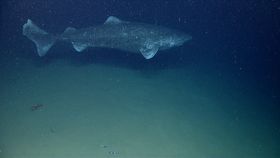


Some Greenland sharks alive today were over 100 years old when the US was established. As the oldest living vertebrates in the world, scientists are now hoping they could hold the secret to a long and happy life.
The University of Exeter in the UK is sequencing the DNA of these mythological-like creatures in the search for unique genes that could help explain their longevity and resilience. The researchers explain that the genes could shed light on why all vertebrates have a seemingly finite life span.
“This is the longest living vertebrate on the planet. Together with colleagues in Denmark, Greenland, USA, and China, we are currently sequencing its whole nuclear genome, which will help us discover why the Greenland shark not only lives longer than other shark species but other vertebrates,” Professor Praebel, of UiT the Arctic University of Norway, announced at a lecture at the University of Exeter.
“The results we presented here in Exeter will help us understand more about the biology of this elusive species.”
They have already begun working on this project using DNA they obtained from a clipping of a live individual's fin.
Greenland sharks (Somniosus microcephalus) grow to up to 6.4 meters (21 feet), around the same as a great white shark. They can be found across the north Atlantic ocean, from seas off Greenland and Canada to Norway and even the north of Britain. A previous study in the journal Science found that the oldest Greenland shark was an estimated 392 years old, although there’s a plus or minus 120-year margin of error.
As if they couldn't get any more badass, they have been recorded eating polar bears. Analysis of their stomach contents has shown they occasionally eat seals, horses, moose, reindeer, and polar bears, although they tend to generally stick to small to medium sized fish. As for these larger land mammals, it's most likely they scavenge on their dead bodies as they are known to feed off carrion.
Professor Praebel describes the sharks as “living time capsules.” These animals have been around for decades (if not centuries) before overfishing, industrial pollution, and climate change took its hold on the environment. Scientists could, therefore, use them to help understand the impact of humans on oceans since the Industrial Revolution.
Other than this, not much else is known about this elusive species. Although preliminary analysis of the shark’s DNA has already given some new insights into their behavior, such as their breeding and mating habits.
“Since the Greenland shark lives for hundreds of years, they also have enough time to migrate over long distances and our genetic results showed exactly that. Most of the individuals in our study were genetically similar to individuals caught 1,000s of kilometres away,” Professor Praebel said.