Nature
 PUBLISHED




The National Oceanic and Atmospheric Administration has taken to stalking orcas (Orcinus orca) using a remote-controlled aerial vehicle.
Even while being kept at a distance where it would not disturb the whales, the hexacopter took images so sharp it is possible to tell that some of the whales are pregnant.
The footage they took is disturbing. Some of the Northern resident orcas they tracked are lacking in body fat and in very poor condition. While they were tracking one, it failed to surface and appears to have died. While there could be many causes of death, the researchers are concerned that the whales in the area are affected by declines in the Chinook salmon population, one of their main food sources.
One particularly intriguing aspect was the observation that A46, the brother of the whale that died, called extensively after losing his sibling. NOAA's John Durban speculates he may still have been seeking his lost brother, or telling the rest of the pod the sad news.
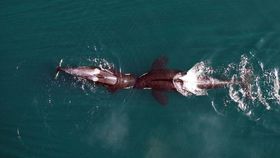
However, it's not all grim times for the whales. The scientists managed to get the photo above of two orcas nuzzling (or maybe playfully head-butting) each other. Orcas spend their entire lives in family pods, which in some cases can be an entire century.
Despite being apex predators, the orcas are disturbed by vehicles that get too close, leading NOAA to warn drone owners to keep their distance.