


 Nature
 PUBLISHED


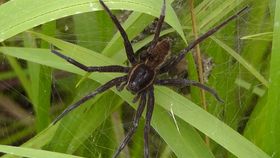


In great news for conservationists, but maybe less so for those suffering with arachnophobia, Britain’s largest spider is seeing a remarkable comeback. The fen raft spider can grow as big as the palm of a hand, and while it normally fills itself on pond skaters and diving beetles, it’s not averse to snacking on larger prey, such as newt tadpoles and even small fish. Nearly driven to extinction in the U.K., the spiders are now thriving in the waterways of Norfolk and Suffolk.
Since the arachnid was reduced to just three locations in Britain, a concerted effort has seen the spider introduced into already existing suitable habitats, as well as ponds and waterways restored by conservation groups. This has proven a massive success, as at one site in the rivers and lakes of the Norfolk Broads where the spiders were introduced in 2012, the number of nursery nests spotted has more than doubled from 184 last year to 480 this year.
This return from the edge has been aided in no small part by ecologist Dr. Helen Smith, working in conjunction with Natural England, who has hand-reared around 6,000 baby spiders in her own kitchen. Lined up in test tubes, she has fed each one individually until around three months of age, at which point they were released into nature reserves in the east of England. This might sound like a large number to release, but their survival rate as spiderlings is not particularly high.
A fen raft spider catching a fish. dharmaburn/YouTube
With its chestnut color and cream stripes, the fen raft spider is a particularly beautiful arachnid, if you’re that way inclined. With bodies growing to around 2.5 centimeters (1 inch) in length, their leg span can reach 7 centimeters (2.7 inches), which allows them to walk across the water of the ponds and ditches in which they live.
While they live and hunt on the surface of the water, the females build what are called “nursery” webs, which can house hundreds of spiderlings. It is these that give their presence away, and which conservationists can count to get an idea of their numbers. The species is classified as “vulnerable” by the International Union for the Conservation of Nature, and the current count for the species in Britain is now believed to be somewhere in the thousands. Hopefully, with the creation of more habitats and the release of more individuals, the spiders will once again be restored across the whole of Britain.


 1
1