Nature
 PUBLISHED


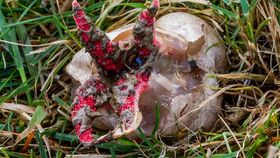


Although it might look like something straight out of an "Alien" film, Clathrus archeri is actually a fungus.
Clathrus archeri, also known as Devil’s Fingers or octopus stinkhorn, is native to Australia and New Zealand, although it’s now found throughout Europe and North America. The first sighting in Europe was in 1914, where it is thought spores of the fungus were brought over in military supplies for the First World War.
Despite its unappetizing appearance, you can actually eat Devil’s Fingers. Although, perhaps put the the chopping board away; it apparently has a smell very similar to rotting flesh. It uses the gross odor to attract flies, which fly off and unwittingly disperse their spores.
If you want to remove this fungus from your land, gardeners recommended you send it back to the pit of hell it was spawned from.
Check out the timelapse video, below, to see one emerging from its “egg.”
Main image credit: BiteYourBum.Com Photography/Flickr. (CC BY-NC-ND 2.0)