Space and Physics
 PUBLISHED
 1
1


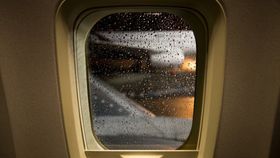


Now that the mystery of that little hole in airplane windows has been solved, another question remains: Why do plane windows always have a curved edge?
Within just five years of their introduction, three de Havilland Comets – an early commercial jet design with square windows – suffered from a series of tragic crashes. The third crash in 1954 led to investigators stepping in, who revealed that all three crashes had been caused by cracked window frames.
It transpired that square windows deal very badly with the stress caused by the increasing cabin pressure that comes with high-altitude flying. From this point onwards, the windows of planes were built with rounded edges as they allow for a smooth distribution of pressure.
Check out this video by YouTube channel Real Engineering, who explains the physics behind this engineering quirk that has puzzled air-travelers ever since.