Space and Physics
 PUBLISHED


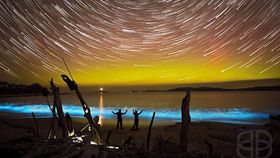


Tasmanian photographers have captured one of the rarest combinations of beauty the planet has to offer, combining the aurora australis with a hint of bioluminescent plankton.
The patronus-like blue of the seas is caused by a bloom of dinoflagellates called Noctiluca scintillans, or sea sparkles. These light up when disturbed, even by gentle splashing, possibly as a way of attracting fish that feed off their predators.
Auroras also signal a disturbance of the Earth's magnetosphere by the solar wind, which sends charged particles into the upper atmosphere.
Catching the two together is hard – the current bloom has been gaining strength in the waters of southern Tasmania in recent weeks, but at the same time the aurora has died down. Nevertheless, Tasmania's rich pool of nature photographers are on the case, following on from the extraordinary images taken of the intense bloom seen in May 2015.
These latest photos were all taken over the past month near Hobart, Tasmania, and are used with expressed permission from the photographers of the Facebook group Bioluminescence Australia.
The wind and tides sweep the plankton around, so a beach shimmering blue one night can be dark the next. The Facebook group is used to keep people informed of the best places to look.
It is very unusual to have two outbreaks at the same spot within 18 months, particularly so near a city, and the return may be an indication of changing currents or higher temperatures.

The bioluminescence in this shot from September 2 hinted at what was to come. Wayne Painter

No aurora, but the dinoflagellates more than make up for it. Leena Wizz

Waves washing up against rocks spark the scintillans to light up. Toby Schrapel

Jess Lane combines the luminescence with the surroundings

No aurora on September 23 at Rokeby Beach so Leoni Williams added twirling LED lights.