Health and Medicine
 PUBLISHED
 4
4


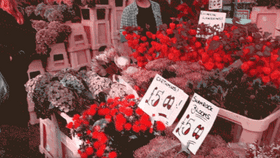


Around one in 12 men and one in 200 women are color blind. That’s a considerable number of people. But for those who are not color blind, it’s pretty hard to imagine how those who are see the world.
Clinic Compare has created these GIFs to give you an insight into what it’s like to experience color blindness – and what better place to demonstrate this than a color-filled flower market?
According to Color Blind Awareness, the most common form of color blindness is red/green, which includes protanopia, deuteranopia, protanomaly, and deuteranomaly. While all of these are slightly different, they all involve difficulty in differentiating red and green colors.
But as you’ll see, there are also rarer forms of color blindness that affect an individual's ability to see blue colors and even an extremely rare form where people can’t see any color at all, known as achromatopsia or monochromacy.
Protanopia (red-blind)

Protanomaly (red-weak)

Blue cone monochromacy

Tritanopia (blue-blind)

Deuteranomaly (green-weak)

Achromatopsia (monochromacy)

All images from Clinic Compare